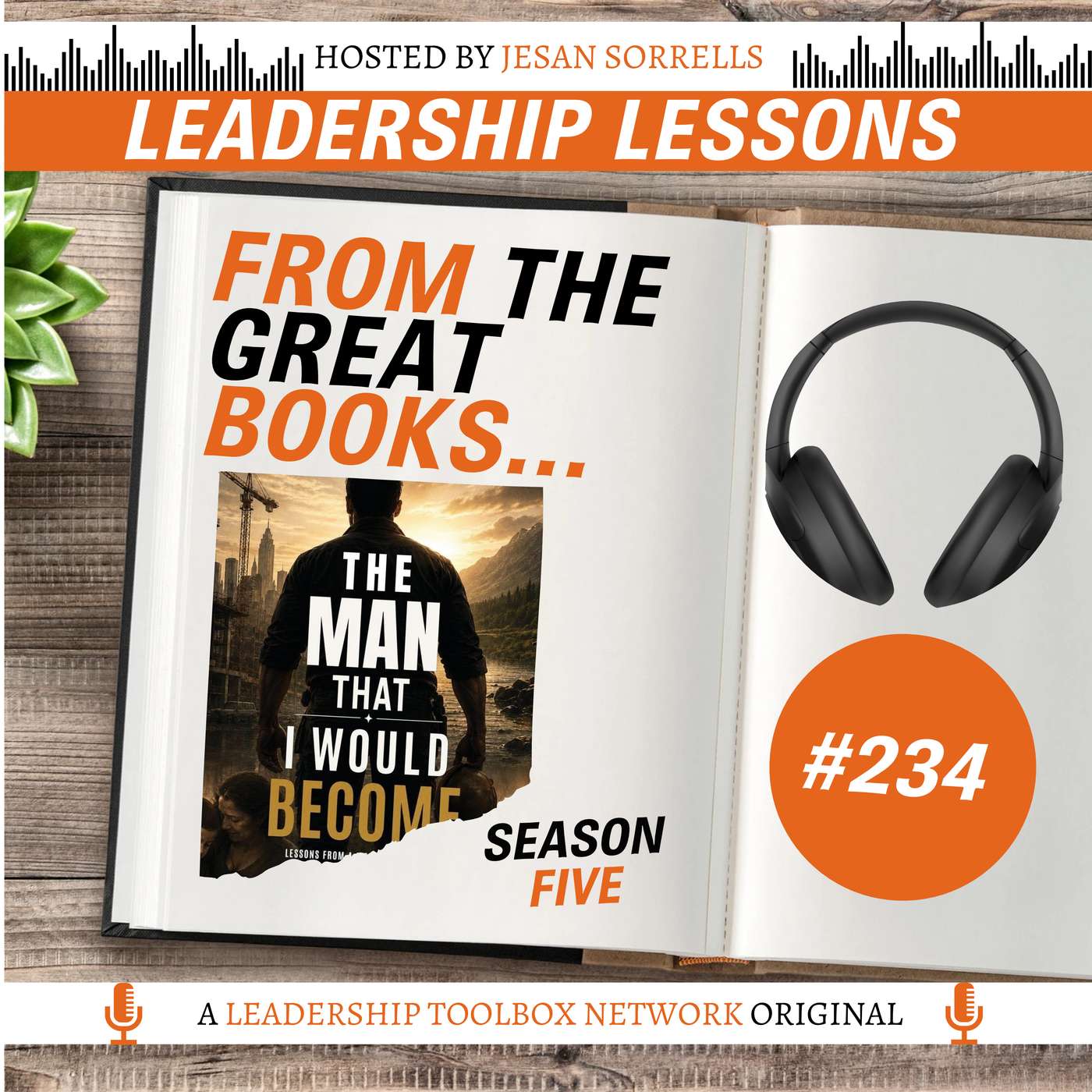
The Man That I Would Become: Lessons from a Life of Hard Work, Faith and Purpose by Victor L. Bretting
The Man That I Would Become: Lessons from a Life of Hard Work, Faith and Purpose by Victor L. Bretting
---
Exploring the intersection of legacy, grit, and faith, this episode features a candid conversation with Victor Bretting about his memoir, The Man That I Would Become. The discussion unpacks the vital role of hunting in conservation and ecological stewardship, the necessity of resilience and discipline for the next generation of leaders, and how faith shapes enduring leadership and personal purpose. Listeners gain actionable insight on leading by example, persevering through adversity, and shaping a legacy that lasts beyond a single lifetime.
- Book Title: The Man That I Would Become
- Author: Victor Bretting
- Hosts: Jesan Sorrells & Victor Bretting
---
Time-Stamped Overview:
---
00:00 Victor's hunting and ranching journey
03:24 Transitioning Ranch to Charity Work
06:34 Understanding conservation and its benefits
11:07 Books on masculinity and fatherhood
15:15 Balancing mental and physical work
16:11 Discussing empathy in construction
20:15 Understanding hard-headed empathy
24:27 Challenges for Young Professionals
28:28 Reflections on Upbringing and Family
30:49 Parenting different age groups
35:54 Importance of Biblical Foundations
39:37 Reflections on Retirement Life
43:34 Books every leader should read
44:49 Impactful books on teamwork
---
Connect with Victor by clicking the links below:
---
- Book: https://www.amazon.com/Man-That-Would-Become-Lessons/dp/B0H2BMNTFQ/
- Website: https://brettingtexanranch.com/
- LinkedIn: https://www.linkedin.com/in/victor-bretting/
---
- Opening theme composed by Felipe Sarro - Bach - Silotti - "Air" from Orchestra Suite No. 3, BWV 1068
- Closing theme composed by Brian Sanyshyn of Brian Sanyshyn Music.
---
- Pick up your copy of 12 Rules for Leaders: The Foundation of Intentional Leadership NOW on AMAZON!
- Check out the Leadership Lessons From the Great Books podcast reading list!
---
- Subscribe to the Leadership Lessons From The Great Books Podcast: https://bit.ly/LLFTGBSubscribe
- Check out Leadership ToolBox at: https://leadershiptoolbox.us/
0:01 Hello, my name is Jesan Sorrells, and this is the Leadership Lessons from the Great Books podcast bonus.
0:11 There's no book reading on these bonus episodes. These bonus episodes feature interviews, rants, raves, insights, and other audio musings and conversations with interesting guests around leadership, around life, and around all of the other areas that impact how we think and how we engage with leadership. Because listening to me talk to an interesting guest, or even just listening to me ramble incoherently by myself, is still more interesting than trying to read and understand yet another business book.
0:50 Now, today on the show, we are welcoming to, uh, to our conversation here, Victor Bretting. Victor Bretting is an 8th-generation Texan, part of the original Old 300 settlers who received land grants from Stephen F. Austin. He has been hunting since his early teens. His uncle took Victor on his first deer hunt when he was 13 years old. He shot his first Texas exotic over 25 years ago, an axis, blackbuck, and a fallow deer. He and his wife started hunting internationally over 20 years ago and have harvested over 140 different species of animals from across 6 continents.
1:30 His love for the sport led him to acquiring the Bretting Texan Ranch, which is designed to help preserve the hunting heritage for his grandchildren and for the generations to come. Victor is the author of The Man That I Would Become, a Texas rancher memoir and hunting memoir book, raw and honest about growing up without a present father, learning grit from a relentless mother, and building a life through sweat, sacrifice, and faith. And those of you who are regular listeners to this show know I talk absolutely nothing about hunting, not because I don't know anything about it, but because what I know you could probably put in a thimble in comparison to our Our guest today.
2:18 Also, I know very little about ranching. As you know, I live in Texas, not going to disclose where, but I live in Texas. And those of you who are listening know, and I've talked about this before, I own a little 5-acre plot. I am not a rancher by any stretch of the imagination, but I am raising my children to take care of chickens. And I think that that's a good beginning, at least, to learn some of the things that Victor has spent time, well, has been doing for so long that he's probably forgotten all of these things.
2:48 So I come into this conversation as an amateur, and we're going to take a walk through this conversation with Victor today. Welcome to the podcast, Victor. How are you doing today? Yeah, thank you. Appreciate you having me on. All right. So let's start off with this. I gave you that introduction, which I pulled from your website, but sometimes I noticed that website introductions don't I note that website introductions don't always do justice to what— to our guests. And so I always ask this question.
3:17 I always start off with this one for our listeners. What is it that you do exactly? Well, still, I retired at one point in time from construction. So I've, I've got 50 years in, in construction. I bought the ranch. The ranch was really supposed to be about our retirement and continuing the hunting heritage like you talked about for my, you know, my grandkids in the future. And We met a couple of folks at a, a show that totally changed the ranch into about what legacy I'm going to leave. And that is the legacy of giving back because we've donated 64 hunts in the past 3 years to faith-based children group, to terminally ill kids, to veterans group, Purple Heart group.
4:00 So it kind of, it morphed, you know, my, my life now and what do I do? My life is I work to support the ranch and the ranch supports the You know, the charity work and the donations that we do, hopefully helping folks, you know, going down the road. So when you talk about hunts, again, I have a number of listeners from all across the globe. People, you know, listen to this show who, who live in large cities, both in, both in the United States and in Europe, who probably haven't ever hunted for their food ever other than standing in line at whatever their local grocery store is.
4:35 And we also have people who listen to my show who might have some familiarity with hunting. So why don't you walk us through some of the basics? Why is hunting important? Why is it important for ecosystems and for management and for wildlife management? And why is it important for human beings to even be engaged with this? Well, I think, you know, it says in the Bible we're in charge. So we're in charge of the ecosystem. So, you know, part of that is balance. You know, on the ranch, that's, that's what we do.
5:07 We've, we've got 2 animal species right now on the ranch that are extinct in their native land. If it wasn't for ranches like us and other ones, those animals would not be around. And some of the animals that we have have been reintroduced back into their natural habitat and now are, you know, are starting to, you know, thrive a little bit. So, you know, we're, we're supposed to be the keeper. So to me, you know, the, the idea of hunting is, is not about what you hear all the time on this kill. It's not.
5:34 That's, that's not what this is about. I've never had anybody come to my ranch at any point in time and brag about the 1 second they pulled the trigger was so fun, man. That was just the greatest thing since sliced bread. You know, it's what happens before and what happens afterwards. It's the camaraderie. You know, I'll give you one a little bit about conservation. You know, my wife and I just came back from Africa. Well, I, I green darted my rhino. Okay, so what's a green dart? We tranquilized the rhino, paid the man a fee to do it, took a picture with it.
6:01 But nobody ever talks about what the ranchers do as far as conservation. Yeah, that rhino's being preserved, but at what cost to the rancher? All the fences they gotta put up, all the vet bills, all the food, right? Everything that they do to keep that animal alive comes outta their pocket. You know, so to me, conservation is a lot bigger than what people think. You know, some people think it's just an ad on there that makes you feel bad and wanna donate. That's not what it is. It's about what we do, which is we, we literally are in charge of the animals, and that's our job.
6:34 So conservation. So I understand this through the lens of— you talked about it in the Bible. As a Christian fellow, I understand it through the lens of stewardship, right, of a creation mandate. But when you talk in those kinds of terms, right, people who aren't familiar with the biblical corpus or aren't familiar with what we're talking about, they have no commonality to that, right? So when you use the term conservation, I like that you're using that term. What are we conserving? Let me ask you that question.
7:03 What are we conserving and for whom are we conserving it? Why, why is it important to engage in that process? You mentioned that, you know, you have animals that have been reintroduced into, into their native species who are their native habitats, who were, who are on your ranch. But what are the other, what are the other reasons for that? Like, what are the human reasons for that? What, what benefit is there to human beings from conservation? Well, one, you know, I believe us as parents are always wanting something better for our kids.
7:32 So do you want to sit and sit and tell your kid that there's no more whitetail left in the world because we all shot them out and we didn't care about them? So part of conservation is why do I do what I do? It's for the next generations to come. All right. We always want what's better for that next generation. At least that's what we always try to do. So that's, that's the one part of conservation. And the other part is, you know, we weren't, we weren't put on this earth basically, you know, just to take.
7:55 We're put on this earth to give. So part of giving back is to the animals as well. Keeping them alive, keeping them healthy, making sure there's enough stock, you know, enough breeding stock. So to me, that's that whole loop of conservation is I want to leave something better for my kids than what I came into this world with. Absolutely. Okay. So you wrote a book, The Man That I Would Become. That's initially sort of what got us connected, right? Talk to us a little bit about the history of the book and sort of where that came from and why you believe that now is the time to publish that memoir.
8:31 So it was originally just supposed to be for my kids and my grandkids and their kids going forward, because, you know, they, they don't necessarily understand what I went through, you know, growing up. You know, I didn't have a dad. My memory of my dad is literally sitting in a, in a recliner with a Falstaff or a Schlitz beer and an unfiltered Salem cigarette with an ashtray running over, you know. So my mom was always the port of my life. So she's the one that taught me the perseverance, the drive, the determination.
8:58 You don't give up. So Part of all the understanding to my kids is they need to understand perseverance is important. They need to understand faith is important. They need to understand, like, you know, you're from Texas, so you'll understand. Cowboy up. You got bucked off. Okay. Okay. Get dusted. Dust your chaps off. Get your ass back on the horse. Right? That's right. So they need to understand life is not going to be given to you. Right. I remember my mom at a really early age teaching me this one that I've, you know, I respond to all of my life is God's going to provide to you and he's not going to put anything on you you cannot accomplish yourself.
9:30 But you got to get off the couch. And that's so problem with so many people in today's world. So this book has morphed into a lot of different things instead of just being a memoir about me and what I've come from. And the book is not about my success. That's not it. It is about the journey, what you have to go through, the dark days you're going to come through, and the silver lining at the end of the tunnel because of that perseverance and that faith and that belief that you got. So it's kind of led into leadership book because 50 years being in construction It's led into suicide awareness.
10:00 I, you know, because of the veterans that we have on, you know, here at the ranch that we provide the hunts for, you know, everybody talks about the 22 or 23 suicide deaths that happen a day, you know, in the veteran community. What they don't realize, and I did not realize this, is there's 50 deaths in the construction industry. We are the 2nd leading cause of suicides based on any type of work. So, that led to me saying, well, maybe there's a platform too that I can help somebody or they can understand.
10:28 Because, you know, you know this, we don't, we don't talk a lot. We're men, we're macho, we take care of it. You know, we're gonna, we're gonna be in the bar fight and be the biggest one. And so part of, part of this journey, right, the man that I would become, is about being raised without a dad that— with no feelings, right? Mhm. There was no room for crying. There was no room for anything other than get your work done. Because I watched my mom Well, you have a couple of failed marriages because I couldn't— there was nothing to give.
10:54 It wasn't like I wasn't trying, but there just wasn't that heart, right? So this journey is really what this is about. How do you become something and how do you persevere through it? And how do you continue with your life to try to be a better person? Now, it's interesting that you talk about failure because one of the things we talk about on this show is what books can teach us, right? That's, that's what the core show is really, is really about. Um, and, you know, I got that idea of what literature could teach us from— you talk about, you know, your father being, being absent or maybe being bodily there, but not being emotionally there.
11:32 And, and, you know, in a lot of ways, my father was, was the same way, right? Um, and so I picked up a lot of what I have cleaved to over the course of my life from, um, from my mother and from my grandmother, right? And I think a lot of guys who grow up in those kinds of environments and grew up in those kinds of environments, and you and I are probably separated by 20 years, probably.
12:00 There's been a generational shift, right, in how masculinity, I guess, is thought of and how we, how we talk about it both as men, but also just as people walking around, you know, in the world. Now we can argue if that is a good thing or a bad thing. But ultimately, at the end of the day, having these kinds of conversations is critically important. Books can help us get to those kinds of conversations and open up those kinds of doors. At least that's what I found in my life. I guess the question that I have for you is, you know, you said you started out in construction.
12:41 Construction's really hard. My father put on roofs in New Mexico for years, right? My father did construction work, right? The closest I've ever gotten is being an amateur carpenter. Don't ask me to put together a house. I, you know, I can hammer a nail in straight, but that's about where it begins.
13:01 Hey, that's at least good. You could do that. I can do that. I have mastered that. That's good. But beyond that, well, everything is, you know, YouTube University, and we're gonna take this an inch at a time. Like, this is how this goes. But what were some of the things you learned? And you probably have this in your memoir, but I'm not asking you to tip your hand because I want listeners to go out and get the book. But how did you, what were some of the things you discovered in construction in that space?
13:28 And what was it that kept you in that path other than maybe money and success over the course of, over the course of, like you said, a 50-year career? Well, one, I love construction because we see a product of what we do every single day. It's kind of neat. You know, the next thing is, you know, when I built a stadium, I never built a stadium before. When I built a nuclear power plant, I never built one before. So it challenges your mind. You've got to figure things out at all points in time because you've never done it before.
13:54 So that was— that's what kept me there. And, and yeah, I've led a good life. I've been paid well. Um, but you know, construction— that the positive and the negative of construction, right? We're all A-type personalities. You know, you take the hill, get out of my way. You know, so Victor's learned a saying in my leadership: it's tens and ones. You know, God gave you So if I can take the hill and, and get out of my way, and I'm going to make it happen no matter what, my 1 is I don't have any empathy, I don't care, and I probably don't listen really well.
14:23 And there's a whole bunch of things that go on the 1 side. So part of my transition in my life was to understand that I was feelingless at one— at some point in time. I just couldn't connect. And the other thing, then realized, okay, if you're really going to be a well-rounded person, the 10 does not become a 5. 'Cause I tried that, lost money on the only job that I have ever lost money on in construction in my entire life 'cause I changed what God naturally gave me. Yeah. So you learn to be a better person in life.
14:52 You take your 1s and you just pick 'em up a little bit. 2, take 'em to a 3, and if you get lucky, take 'em to a 4. I'm still inside, take the hill, get outta my way. But we can sit down and have a conversation and I can listen to you about what you believe before we take the hill. So to me, it's your transition in your life, which goes back to the book again, How are you transitioning in your life to be a better person? It's interesting that you talk about being a 10 and being a 1, um, and, and, and transitioning those 10s, you know, or maybe not the 10s, but transitioning the 1s to, you know, maybe 3s or 4s or 2s even, and moving those up.
15:28 Um, because we talk a lot in our culture about empathy, right? And, uh, you know, I'll, you know, lay my cards on the table here. I'm a white collar guy. Right? I, you know, do things with my brain. 90% of the work that I do is with my brain. This is why carpentry is so interesting to me because it's the other 10% of my life where I actually get to do something physical. And to your point, build something in the real world I can actually see, you know, oh, I built that, that's there. Or if I failed miserably, oh, I failed miserably, there that is, right?
15:59 So it's immediate feedback, right? And I like things where I get the immediate feedback because So much of white-collar work,
16:09 you're not getting that immediate feedback. You know, you file the paperwork or you, you press the keystroke on the, on the computer, right? Or you move the numbers around in the file and then you email it to somebody. And then there's a long, there's a long stretch before you get any feedback about that. And so, there are many days in the kind of work that I do where the conversations are full of People management stuff around empathy, around listening, around courage. And we talk a lot about that on the show because I do think those are important things for leaders.
16:42 But what does empathy mean when, when you talk about it? What do you mean when you talk about that? And let's frame it in the context of something that people think of as being hyper-masculine construction or hunting, right? You talked about hunting and stewardship and hunting and conservation. Stewardship is the word that I use, but conservation. Now we're talking about empathy and construction. How this is going to mess with some people's brains, but how does that show up in practical ways? Because we also are practical on this show, in practical ways on a construction site.
17:13 How does that show up when you're managing people? Well, you know, it is an oxymoron, just like you talked about empathy and, I mean, construction, the two don't go well. And I'll be honest, empathy probably does not have a lot to do in construction. Empathy, me, really is more in my family life, you know, being able to put yourself in somebody's shoes, seeing somebody, you know, go down the road that's homeless. And instead of just bypassing, maybe sit and ask them a question. Because, you know, let's face it, you need to ask a question because half of them are fake and half of them aren't.
17:42 So, you know, and I'm one of those kind of guys that I'm going to give you an olive branch. But if that sucker comes back and you've taken all the flowers and the petals and the leaves off and you give me thorns, the fight's probably fixing to be on. So. Yeah. But I'll earn your trust, right? That's one thing about a leader that I've done. I will earn your trust. It is my job to earn your trust as a leader. So, I wouldn't say that I have much empathy basically in construction. There will probably be individual circumstances.
18:08 I think my model is more, you know, lead from the front. If I've— if you have failed, then it's my fault because I either hired the wrong person or I didn't train you, teach you, put you in the right position, put you on the right seat of the bus, you know, all the things we read about. So, I would say there's probably some. I'm sure there's something come up and the guy comes to me and says, you know, I, I, I've I've got an issue. I just don't know if I can make it to work tomorrow. Well, how come?
18:31 Well, my wife's fixing to have a baby. I don't have money to pay the doctor. And I think I might miss a day or two. That's probably where empathy would come in that I can at least understand your situation and say, buddy, you're not going to lose your job. But you need to come back as quick as you can because we need you. So, I would say that situation. But other than that, it's probably more of that oxymoron.
18:56 Well, and I divide it up into kind of
19:01 2 different types of empathy, right? I classify it in 2 different types of ways, right? Because it's like, for me, the analogy is we use the word love in our society and culture, but the way I love my dog and the way I love my wife are not the same way. You know, if I love my wife like I love my dog, that'd be a real problem, right? I think I say, I hope that, hope you don't. Yeah. Yeah. It'd be a real problem for me, right? It'd be a real issue. Yeah, it would be. Not for the dog, but— No, no, for you and your wife.
19:29 That's right.
19:32 So, you know, English is this funny language where we use one word and the context is what we actually are trying to cover. That's the waterfront we're trying to cover with that one word. And I kind of divided up, and I wrote about this in my leadership book, 12 Rules for Leaders. There's what I call marketed empathy, which is the empathy that you see like in marketing advertisements and you should feel this or you should feel that. And it even shows up in business communications and things like that, and even sometimes in business books.
20:02 But then there's what I call hard-headed empathy. And hard-headed empathy is where, to your point about the example of the guy, um, with who, you know, having a baby and I need to take a couple days off and I gotta be here, I gotta be there. What do I do? Help me solve this problem. That's hard-headed empathy. That's not, oh, I'm just going to feel your pain because that's not helpful to that guy at the moment. Um, what's helpful is Recognizing that you could have been in his shoes or, or even recognizing, you know, what would I want done for me at this moment?
20:31 Not how is it going to come back, but what would I want done for me in this moment if I were in that space or I have been in that space? And now I can extend that to him and we don't have to hug it out at the end and I don't have to invite him over for a barbecue. Um, but I can, I can extend that. I can extend that to that other human being and see his humanity. And to me, that's a lot more challenging and nuanced, which is why I call it hardheaded empathy, than kind of the blanket sort of way we talk about empathy.
20:59 And, you know, in the, in the, in the leadership field, you know, or in the field of leadership development.
21:07 Well, I agree with you. And I agree with you for 2 reasons. One is, one is I'm going to try to make you feel something. And the other one is how I feel. You know, and that's what marketing is. How can I make you feel compared to what's inside of me? So I think that's a, that's a great analogy. You just got to give it. I've never heard it that way, but that's a great analogy. Yeah. Um, there's some other terms that you used in the description of your book, um, The Man That I Would Become. Um, you talk about, you know, grit, sweat, sacrifice, faith.
21:35 These are other terms just like empathy that get thrown around. Um, I want to talk about 2 of them that I think are critical in and important for us to, to have a conversation around. So this idea of grit, right? Perseverance, right? How have— how do you, how do you talk about that in the book? How do you address that? I mean, yes, you know, having a tough upbringing, that's one way. But then what are some of maybe some of the other spots where grit has popped up in your memoir that, that you talk about?
22:06 Well, one, one started really early because I came back from my freshman year with a 1.6 GPA, and the University of Texas decided they didn't want me anymore. So I'm kind of sitting on my couch, you know, with, with my mom, and about 2 weeks, and, you know, I see the, uh, I see my luggage wheeled by. Oh, okay. Next thing you know, she comes and said, can I borrow your keys? Well, maybe just mom doesn't have gas or something, right? No big deal. So 20 minutes later, she comes back, said, can I, can I meet you outside?
22:34 I said, yes, ma'am. Walked outside. She handed me the keys, handed me $20, and said, tell me where you land. What? No. Tell me where you land. You're not sitting on my couch. I got your little brother and little sister you got to take care of. You need to go figure this out, son. So I grabbed a buddy of mine, and he needed to, uh, to have a job to pay for his next year, you know, in college. So we ended up down at Bay City at the South Texas Nuclear Project. And I think we were on day 6, and I remember the hiring manager came out and said, son, you can't stay here.
23:02 And I said, sir, I don't have a choice. I said, I'm down to bread, water, and cheese. I don't have any gas. I said, the only way you're gonna get rid of me is you have to hire me. So come Monday morning, he come outside and he said, if you let me down, so help me God. So there's the start of 50 years. So there's your grit. Yeah. You know, you gotta, you gotta suck it up, buttercup. You know, it's not gonna be simple and it's not gonna be easy, but you have to have a plan. And I'm not saying that first plan's gonna work, but you gotta continue with the plan.
23:31 And my plan was you were going to hire me. That idea of you have to have a plan, and even if your plan is terrible, it doesn't matter. At least you've got something. Um, that idea of even how your mom set that up for you, right? Like, it doesn't sound as though she just sort of was like, you know, get out and I'm not going to give you anything, like get out the door. No, I mean, she gave you the car and $20. and the keys. And I'm sure if she had more, she would have given you more. But that was enough, right?
24:07 And the 18 or 19 years of raising that she put behind that, that was valuable enough, right? You knew the value of hard work. You knew the value of presenting yourself in a particular way to a person in authority or a person in a hierarchical position. And you understood, you know, how to negotiate. And, you know, I have a background in negotiation and in conflict resolution. I understand the power of negotiation. And a lot of young leaders, and when I say young, I mean the 18 to 34-year-old age bracket, a lot of young leaders who are just coming into work now or who are, who are hitting in their first, starting to be groomed for their first roles, you know, moving forward in their careers.
24:56 Some of the listeners to this show, and a lot of them will email me, will talk to me, they are struggling with that resilience. They're struggling with that grit. Why do you think that is? Because what the kind of experience you're talking about, if we dropped any of those folks into that experience, I'm not quite sure they would make it. I would make it, I think, but I'd have to be my age now, jumped into that experience. And then I'd be fine. I'd be like, oh yeah, give me the $20. Like, I got this.
25:25 Not a problem. I'll come back with $500 and with bells on. You, I'll be right, I will be right back. You just, you hold it right there. And I don't, I don't got to drive 6 hours. I'll be right back. Just give me 10 minutes. You know? But I chalk that up to the maturity of 20 years, right? The maturity of being in my late 40s. I don't know that I would have been able to do that in my, in my early, in my, in my late teens and early 20s.
25:54 Um, and I think it's even less so now, right? So how are we— I guess maybe the question is, how are we to sort of get that resilience into, uh, into these, uh, into these younger folks? Because that is the question of our, of our era. Well, you know, I'm gonna say something people might like or don't like, but it's the way I feel. You know, we become a very soft nation. I still believe you have to protect your family. I still believe you need to get up and work. And I never said that was easy at any point in time.
26:25 I said, I never said you liked what you were doing, but— Right. You know, in America, we have an opportunity to do whatever we want to do. You know, I'm living proof of coming out. I was literally a water boy delivering water to 10,000 people in a nuclear power plant, okay, to an executive and owning my own company at one point in time. So you can do anything you want to, but you've got to get off that couch. So I think we're soft. Right. I, I, you know, it's like I'm going to relate it to— and this is a parenting thing, right?
26:56 There's a timeout bench and there's a belt. Okay. At the end of the day, there's a spanking, there's a timeout bench. Okay. Well, we had 2 twins. Okay. If you, if you put the belt in front of one and spanked him, he'd look at you like, is that all you got? You'd put him on a timeout bench and, oh my God, I'm so sorry. I mean, he'd just be a freaking wet noodle. I can't be helped. Right. The other one, you know, you put him on a timeout bench and he'd find a piece of thread or something and he'd figure out how to tighten 50 knots.
27:24 I mean, you know, and you hit him on the belt. Oh, don't hit me, please. I'm so sorry. I didn't mean it. You know, so I do understand the parenting structure of it. Not everything works for every child. But at the end of the day, what happened to discipline? Meaning if you do something wrong, you're going to get disciplined because I just taught you a lesson. What's the lesson I just taught you? That you can't go do anything you want to and think there's no consequences in life because there's consequences to every answer you say, yes and no.
27:53 Right. So that's where I believe the soft has come from. Oh, it's okay. And we talked about this already. I want my kids to have a better life than I do. Right. But that doesn't mean I'm going to give it to you. Even my kids today, they know the inheritance of the ranch means one thing. You will continue the legacy that we're doing, which is giving back. And if you don't give back, I'll sell the ranch tomorrow because why am I working right now at 67 years of age trying to do something for you if you don't understand what life is really about?
28:21 So, I would say that's one. I mean, we can get into many discussions, but to me, I think we're soft. I really do. I think we're soft. Well, and I also think that the more you get, right, the harder the struggle. And we don't actually talk about this too often, but I think it's worthwhile because it actually ties into the other thing which I want to talk about, which is faith. I think that, you know, so I look at, I look at my own upbringing, right? My mother and father both worked hard. I don't think my mother made more than $50,000 in a year before she was 50 years old.
28:54 You know, I don't think my father did either. And yeah, my mother was a little more white-collar oriented, you know, in her career and in her life, but it took her a long time to get into a spot where in her work and in her position in life, where she was able to be quote unquote comfortable, whatever that may mean. So, you know, there were times we did without, there were times we didn't have, there were just, that was part of my upbringing. Fast forward to myself with my 4 kids, each one of my children, because they're separated by many years, but each one of my children has had a fundamentally different experience with being raised because they were separated by many years.
29:36 And so, you know, the difference between, you know, the 21-year-old and the 9-year-old, right? Or the 16-year-old and the 29-year-old. Like, that's, that's going to be, there's going to be differences, right? Because I'm at a different stage of my, my wife and I talk about this a lot. I'm at a different stage of my own life, right? And I think that the real challenge becomes not in disciplining, although that's, I would agree with you. There is, there are some, there are definitely challenges there.
30:04 I think the real challenge comes in for the parent anyway, figuring out what the degree of discipline is that's appropriate to this particular thing, because the nuance increases the more resources you're getting into the game, right? Yeah. And so, you know, I opened up with talking about raising chickens, right? We do. We raise chickens and turkeys, right? And my boy who's 9, every morning you got to deal with the turkeys and the chickens. And, you know, just a basic thing, right? Like if they don't have water and they, they, they perish because they don't have water and we live in Texas and it's 110 degrees in the shade until like November, right?
30:41 If they, if they die, that's on you, right? You failed, right? Yeah. And so he's a kid where I don't need the belt or the bench. I can just talk that kid into like, into a thing, right? And yes, at a certain point, we're going to turn the corner and you just have to do the thing, but that's going to work with that kid right now. The gap between the 9-year-old and the 16-year-old, 16-year-old's a little different. She's going to require a little bit of a different, a little bit of some different pressure points, right?
31:13 I know who that kid is, right? And so it becomes nuanced, right? And I always think about it in this way. I'm not raising children for my legacy, although that's important. I'm raising children so that they can go out and work with folks like yourself and your sons. So they could be supervised by your children, right? Because I know my 9-year-old's going to eventually have to show up and do a job at some point for somebody that they may not be interested in doing. And he's going to have to flash back to the chickens.
31:43 I remember. Exactly. Exactly. He's like, oh, I didn't want that. So I'm going to go, I'm going to go do this. And that I think is the challenge for a lot of, a lot of folks.
31:55 I think what mitigates this is faith. So, talk to us a little bit about faith. Talk to us a little bit about how that has impacted your life and your experiences, how that helped you get through hard times. You know, what does that actually mean? How do we practically walk— how have you practically walked that out? Well, you know, Mom again grounded me in faith. I was in a faith-based school until I was in 6th grade. So, you know, the fundamentals were there. Mm-hmm. Um, and, and like every young man, you know, you, you go left, you go right, you go left, you go right, and you try to stay in the middle, you know.
32:31 And I'm not going to tell you that I was extremely strong in my faith in the middle part of, of my years. I knew where I was going. I knew I believed. I knew I didn't steal. I didn't, I didn't hate, didn't kill people, blah, blah, blah, right? I knew that, but I wasn't really strong in my faith. And I'll be honest, the, um, the faith started coming back You know, with my wife, you know, because she's very strong in hers. And then the ranch, the ranch just totally turned it, you know. So, so here's a funny story I always tell everybody.
33:00 I didn't know what my path was until I was 64 years old. And I woke up one day and God said, you're going to— your legacy is going to be that you're going to help as many people as you can on this ranch. And all of a sudden I went, okay, I know what my path is. So I believe that you're put on a path on this earth and you might not understand where that path is, how it goes, and when you get there. But man, when you get there, there's something, there's just something that goes to your heart and, and the, and your head and the pressure that just seems to come off.
33:33 Like, I got it. You know, I understand. And you know, the only person can do that to you is God. You know, I just was a little stubbornheaded. Of course, you'd have never imagined that said I'm an A-type personality in construction. You would have never have known that, but. I'm shocked. Hey, I know, but here I am. So that's what I would say is we, we, you know, you need to have a belief. I do believe that. Yeah. But at some point in time, it's gonna kind of, the key's gonna turn the switch and you're gonna start the truck instead of just sitting and listening to the music, you know?
34:06 And I think I started the truck when I was about 64. I went, okay, I'm driving straight. I'm not going left. I'm not going right. Hey, look, don't worry about it. In the Book of Genesis, Abraham, you know, he didn't get kicked out of— he didn't get kicked out of his father's house until he was like 70. And, you know, you know, he was old. He was an old man, you know, and, you know, kept right on, you know, kept right on going. Right. Yeah. And, you know, it's, it's interesting because I've always been strong in my faith.
34:39 Yes, I had wavering moments in my 20s and in my early 30s where there were things that happened where I was just, to your point, going left, going right, trying to stay in the middle, right? But I've always had that pillar of— and on this show, and I've said this before, this comes as a surprise to no one who's listening. I believe in Christianity. I try to walk out Christianity. I believe in the power of Jesus's resurrection. I believe that all the things in the Bible are true. And yes, even the uncomfortable parts that you think are weird and obnoxious in the world that we have in the modern secular world that we have today.
35:13 I think those things are absolutely defensible. I think an apologetic for, for your faith is something that every good Christian should, should have. And to your point, we, we need to believe in something because we're not, as G.K. Chesterton said once infamously back in the day, the Catholic writer, he said, you know, we're not going to believe in nothing. No one ever believes in nothing. There's always something. So we have a lot of people in our world today who either believe in themselves, they believe in the marketing, they believe in whatever the messages are from their family.
35:51 Sometimes if they're churched, they believe in the church. But even there, there might be challenges and struggles. But the book is what you got to get in you. Even if you don't believe in the book, the book is what you got to get in you because, as I, as I always say on this show, it lies at the foundation of all of Western civilization, all of the assumptions that we've made, even the ones that led to you being in construction. The idea that, you know, you would do an honest day's work for an honest day's wage, that has a biblical basis, like period, full stop.
36:23 It just does. And we don't even think about it. It's, it's the fish swimming in the water, right? But it's only when we talk about that and we engage with that out loud that we keep it renewed for every generation, every generation going forward. And so I would say, you know, just like yourself,
36:44 you know, hearing that, that direction and following it is huge, right? Because God could have said, hey, you know, go do this or go do that. And you'd have been like, well, I just, I don't know, I may have some bad, some bad lobster, or maybe that, that whitetail that I had, that venison I had last night, sitting kind of weird, right? And there are a lot of people who do this, right? And, you know, I've often, I've often said, you know, in, in other conversations with folks that I think God talks to a lot of people.
37:16 But I think a lot of people don't hear. That's a lot of people, or a lot of people say no. Right. And God will work things out and there is free will. So you're free to say no. You're absolutely free to say no. And God will just move on to somebody else because God's infinite. Like, that's just it. Um, when we think about earning trust, we think about leading from the front. We think about faith and grit. And perseverance, all these kinds of things you talk about in your, in your memoir, in your book.
37:48 What would you say maybe are the, the top 3 things that someone would get from this, from this memoir of yours if they were to pick it up? And then I'm going to ask you about some books of yours that you might be, you might be interested in as we, as we round the corner on this episode. So what are the top 3 things in your memoir that, that you think people would, would want to pick up if they were, if they were to read it? Don't quit. That's one. You know, it talks about a lot of things that happened in my life.
38:15 I could have sat down and cried in my, you know, my Postos or my Wheaties, you know, and I'm not telling you I didn't behind closed doors. And then you kind of get it over with. You kind of go, okay, I got it, got to go. So grit and perseverance, you know, 2 different words of almost the same meaning, depends on where you're at. So I think you, you, you have to continue to try. Part of the, part of the other thing, again, every, everything I do, my website, everything talks about faith. You know, I, I, I believe you'll, you'll see it.
38:43 So part of faith and leadership has to do from show me, right? I'm, I'm gonna— I've adapted a, a really quick saying, toes and tongues. If my mouth is wagging, my toes better be following. So you can't, you can't go to church, right, and do things and talk about how wonderful you are and leave the next day, you know, go rob somebody. I mean, right? So you gotta lead, right? So hopefully they'll pick up that again. If you're, if you're going to be a good leader, you need to lead from the front. You need to set the pace and the tone, you know, and need to do it.
39:13 And I think the, the other portion of this is just you're not where you're at yet, and you might not know what that is until someday you're going to wake up and God's going to talk to you, or you're going to hit the wall, you're going to break your neck, you're down there on the floor going, what do I do, God? And he said, this is your path. So perseverance of who you're going to become and what legacy you're going to leave behind.
39:37 It ain't over till it's over, you know. The, the town that I live in, in, in Texas has a lot of folks who are retired, right? A lot of retirees. And it's been interesting living here in the sort of the middle part of my career and the middle part of my life, because I get to see a microcosm, a wide swath of examples of how people, quite frankly, live out their, their waning years. And in our culture, I was just talking with, with my wife about this the other night in a different kind of context, but it applies here.
40:14 In our culture, we don't talk too much about what do people do on the back end of their lives. We don't, you know, we sort of have this image of retirement as a sort of—
40:25 you work for 40 years, we still have this Industrial Revolution idea in our brains. You know, you work for 40 years and then You sit around and, I
40:34 don't know, play canasta or backgammon and, you know, have a steak at 4 o'clock and your first drink at 3, and you're in bed by 8.
40:46 That's not biblical. That's number one. That's number one. So number one. Number two, the Bible only talks about— I'm gonna borrow this line from, uh, from the old Zig Ziglar back in the day. I love Zig. But, you know, the Bible only talks about retirement as a punishment. So let's not, let's not, let's not engage with that, right? Everybody in the Bible, everybody you read about in that book worked until they died. Mm-hmm. And it wasn't just because they were in an agrarian society or an agrarian culture.
41:18 It's because work is built into the mandate. You have to be doing something. Now, you don't have to be doing the thing that you were doing for 40 years where you had that bloodsucking boss and you hated him. You don't have to do that, but you do need to be doing something. And so in the town that I live in, and I think we talked about this on the pre-interview, I'm not going to say the name of the town, but you know the town I live in. I see a lot of folks who are struggling with what do we do with this end stage of our lives?
41:46 But then I also see some folks who are really, you know, involved in volunteer work. They're involved in the community. They're really hyper-engaged. They're hustling. They're doing the exact same thing.
41:55 And they're vibrant and they're engaged and they're, they're, they're moving forward. And so it's, it's interesting for my kids to be here, um, in this space, um, because seeing those examples shows them exactly what you're talking about, that the work doesn't end and you can be called at any point in time and you don't just have to just sit and, and wait for the end to come. So I think that that's, I think that's great. Well, it's, you know, you, you hit that That, that nail on the head. I remember a couple things.
42:22 One, I can't remember, it's 10 years ago or something. I was watching, um, some show of, of show and they were asking 80, 90-year-old actors, you know, well, how do you live so long? There's 2 themes that was to every single one of them. You have to have a purpose. You have to have something to love. Mm-hmm. You know, and what you just described is that, what's my purpose, right? You know, I, I know what my purpose is, you know, in my life, you know, and what do I love? I, I love what I do. I love my family.
42:46 I love trying to leave something behind. And, and what I'm— so I've kind of changed my approach on, on what you and I are talking about, what on any podcast, anybody I talk to. And that is, what legacy are you going to leave? Nobody talks about it. And you're exactly right, nobody talks about it. You know, I'm not— my name is not going to be on the side of a hospital or stadium. It's going to be on a tombstone. And I'm okay with that. Yeah. But what legacy did I leave, and what did I pass on to the next generation?
43:15 That's what people don't talk about. And, and if you, if you get that understanding at the end of that road, it's not so bad. I'm okay with where I'm at. I know my roller coaster is going downhill pretty fast, gonna crash at the bottom sooner or later, and I'm okay with that. Why? Because I've got a purpose, and I've got a family, and I love what I do. Yep, yep. All right, so So as we're wrapping up, as we're coming around the corner of our, of our episode, our bonus episode here today, I always ask every guest who comes on and does a bonus episode where we don't read a book, we talk about their book, we talk about their experiences, we talk about whatever their, their, their, their challenge or issue of the day is, or, you know, just what points they'd like to make.
43:56 I always ask them this question because our core show is about literature and leadership. You know, we, we read books on that show and then we try to find lessons in them for leaders. We just came off of a month of Shakespeare. We just read, you know, Macbeth and Henry V, great play, Coriolanus, you know, and really trying to pull from those plays relevant lessons for folks in contemporary leadership with contemporary challenges, right? And so the question, that's a preface to this question. What would you say are some books that you've read outside of your own that you would recommend for leaders to read or just for listeners to this show to read?
44:38 Books that have maybe made an impact on you, maybe made a really good or a really deep impact on you that you would recommend folks pick up? A couple of them always stick with me. Good to Great and then The Five Dysfunctions of a Team. Every team I've been to, we go through The Five Dysfunctions. And it's so funny because me again, coming from the non-empathy side, that how you become a better team member is to be able to be vulnerable, because then all of a sudden you're natural and everybody sees, oh God, this, this, you know, Victor's not little Hitler.
45:14 He really, he really is kind of a genuine kind of a guy. But, uh, those 2 have been a big important part in mine. And I can't remember the other name of the book. And, and really what I picked— and I'm like you, I try to pick up different things from different books. Maybe it's one thing, maybe it's 2. The other one, I can't remember where it comes from, if it's Six Sigma or whatever, but it's hire the right person. Then figure out where they go on the bus. And that's really the key to any business is hire the right person.
45:38 You don't have to know where they're going right now, but if they are a fit for the team, you'll get it figured out. There you go. Well, Victor, I would like to thank you for coming on the show today. This has been a great conversation. We're going to have links to everything everywhere where you are, you know, online. We're going to have We're going to have links to the Breding Texan Ranch. We're going to have links to your book. We're going to have links to previous episodes of previous podcasts you've done in the show notes that are going to be below the player where folks will be listening to this show.
46:13 Before we go, last question. What would you like to promote today? What would you like to, what would you like to have the listeners end with? What are you going to become? What legacy are you going to leave behind? Everybody needs to start thinking about it. And that doesn't mean you have an answer, but you need to start thinking about it. And if we do that, we can make this world a better place. Awesome. Thank you, Victor, for coming on the show. Thank you for taking time to talk with us today.
46:41 And, well, with that, we're out.
 Apple Podcasts
 Castbox
 Castro
 Goodpods
 Moon FM
 Overcast
 Pocket Casts
 Podbean
 Podcast Addict
 Podcast Republic
 Spotify