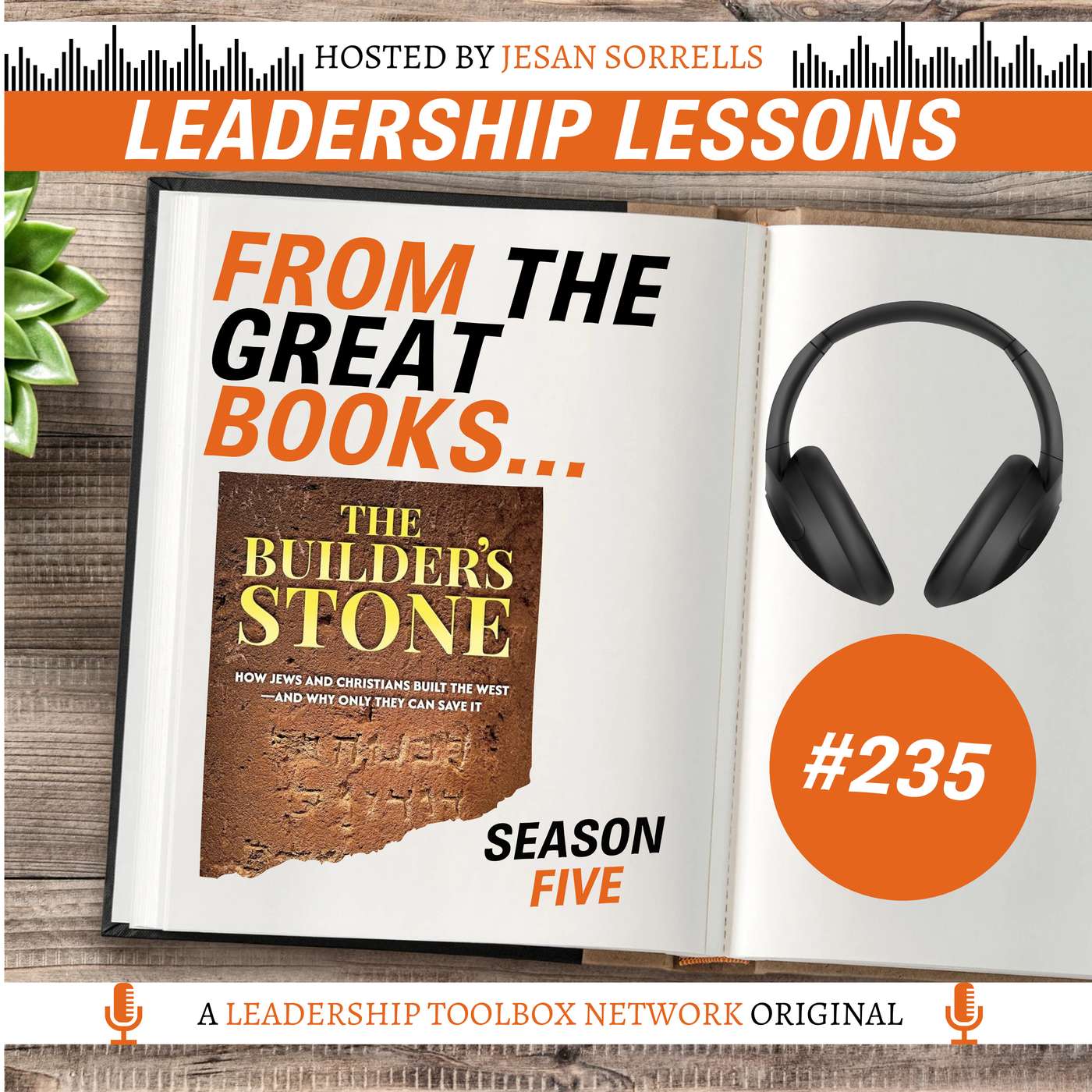
The Builder’s Stone: How Jews and Christians Built the West—and Why Only They Can Save It by Melanie Phillips with Richard Messing and Jesan Sorrells
The Builder’s Stone: How Jews and Christians Built the West—and Why Only They Can Save It by Melanie Phillips with Richard Messing and Jesan Sorrells
---
Exploring Melanie Phillips’ The Builder’s Stone, Jesan Sorrells and Richard Messing examine the pivotal role of Judeo-Christian values in shaping—and potentially saving—Western civilization. They discuss the cultural and ethical ramifications of the October 7th attacks, the loss of moral clarity and confidence in the West, and Phillips’ 10-point plan for revitalizing leadership and religious engagement. The conversation includes a candid analysis of religious divisions, the dangers of relativism, and the urgent need for ethical courage among today’s leaders.
Book: The Builder’s Stone: How Jews and Christians Built the West and Why Only They Can Save It
Author: Melanie Phillips
Hosts: Jesan Sorrells, Richard Messing
---
Time-Stamped Overview:
---
00:00 Religious practices saving the West
09:39 Post-Holocaust Jewish self-reliance
11:13 Melanie Phillips' political journey
20:20 Discussing The Book of Genesis and Theology
22:54 Discussing idolatry and priorities
31:45 Early feminism's Christian roots
35:36 Jewish history and survival
41:05 Debating Theological and Historical Issues
44:27 Differences between Israeli and Western Jews
54:31 Religious remnant idea and confidence
58:00 Challenges of Religious Confidence
01:06:00 Melanie's solution: Coalition proposal
01:09:48 Repentance and national sins discussion
01:17:09 National repentance and moral courage
01:20:47 Discussing spiritual solutions to problems
01:27:05 Reflections on October 7th events
01:29:26 Considering collaborating with someone
---
- Opening theme composed by Felipe Sarro - Bach - Silotti - "Air" from Orchestra Suite No. 3, BWV 1068
- Closing theme composed by Brian Sanyshyn of Brian Sanyshyn Music.
---
- Pick up your copy of 12 Rules for Leaders: The Foundation of Intentional Leadership NOW on AMAZON!
- Check out the Leadership Lessons From the Great Books podcast reading list!
---
- Subscribe to the Leadership Lessons From The Great Books Podcast: https://bit.ly/LLFTGBSubscribe
- Check out Leadership ToolBox at: https://leadershiptoolbox.us/
0:02 Hello, my name is Jesan Sorrells, and this is the Leadership Lessons from the Great Books podcast. And this is a bonus episode. Picking up, well, maybe not picking up from our book today. We're going to summarize some information from our book today.
0:21 This book that we are going to be talking about today is a book that was written In the aftermath of the October 7th attack on Israel. And we've never actually talked about that on this podcast before because, well, for a couple of reasons. One, we haven't really had a need to. But also, we haven't really had a grounding to be able to talk about that event and to be able to to position that event in such a way that leaders can take something from it and understand what to do and what to think about it.
1:00 This book today gives us such a grounding. There is an idea buried in this book, actually not even buried. It's right on the front cover of this book that only, only 2 religious practices in the West can actually save the West. Now, also buried in this book is the idea that the West is on a knife edge and about to fall or may have already fallen into the abyss. And as you know, if you've listened to this show for any length of time, I do believe that the Fourth Turning, which is when chaos and despair really reign in a society at the end of an 80-year seculum cycle, I believe that the Fourth Turning is almost over, and that we are in the process of turning the corner into a veritable civilizational spring, but one that won't look like the last civilizational spring that we all have hagiographied in our minds.
2:06 This book lays out the ways in which religion— and I do believe that religion is key to this— that religion and religious practices and religious traditions
2:18 will buttress that turn and will take us into someplace. Now, for those of us who have historical memory of the last spring, well, we may not recognize it, but it will be spring nonetheless.
2:37 Now, one of the things that I've done, and one of the things that I do in my life, is I pursue knowledge and insights from many different areas. And theology is one of those areas. And as a person attempting to live a Christian life, I spend a lot of my time studying and thinking about Christian and Jewish theological approaches to explaining reality.
3:00 When you do this, by the way, such thinking and such research and such exploration reveals how far most of it is from the secular world's assumed default setting.
3:13 Theology, I have come to understand and I've come to deeply believe, lies at the headwaters of most of the issues and challenges we have in the world today. Theological thinking influences worldviews, and worldviews influence how we engage with culture and politics, and even how we engage with the technology that is bringing you this podcast episode today. Even people who think they don't think about God Think about something, and that something is at the headwaters of their worldview, and every other decision comes from those headwaters.
3:50 However, having a theology is not enough, particularly when that theology is not as efficacious as it could be in producing outcomes we desire in a world full of confusion, A world full of chaos and a world, a fallen world. Just look at Genesis 4, a fallen world in despair. When we wind up at this spot, when we wind up in the place that October 7th revealed, or when we wind up at the place that September 11th revealed, we need to return to the headwaters of our worldview and take stock so that we can move forward.
4:32 Today on the show, we are going to be covering— we're going to be summarizing, we're going to be discussing some of the larger ideas from this book, uh, The Builder's Stone by Melanie Phillips. By the way, the subtitle of this book is How Jews and Christians Built the West and Why Only They Can Save It.
5:00 Leaders, the stone which the builders rejected, the same stone has become the cornerstone. This is the Lord's doing, and it is marvelous in our eyes. And we have to rebuild the Western way of thinking and behaving by first acknowledging that fact.
5:20 And today on my show, today on our show, Today, today in the podcast studio virtually joining us on this bonus episode is our returning guest from episode number 200 and other episodes about leadership and ethics, particularly from a Jewish or Judaic perspective, but also a broader ethics perspective, Richard Messing. How you doing today, Richard? I'm doing quite well. Thank you, Ehsan. And it's, it's always a pleasure for me and an honor for me to, to, to be on your podcast. Uh, I admire what you're doing and, uh, and it's extraordinary and it needs to be done.
6:03 And to be able to participate in this with you, uh, for me is, is a real privilege. So thank you very much. Absolutely. So, um, you and I were talking before we hit record. We were sort of, sort of prepping the pump a little bit and priming the pump a little bit for, uh, for our show today. Warming up. Warming up. Warm it up. Yeah, warming. I was warming Richard up a little bit here. So I know it's been— it's probably been a minute since you've read The Builder's Stone specifically. But why don't we start with this?
6:30 Let's go into the hard parts first. Okay. So on October 7th, Hamas militants engaged in a terrorist attack on Israel. As a result of that attack, Israel engaged on a— what some of my more anti-war listeners would call a scorched earth posture towards the West Bank and the Gaza Strip and any place else where they could find Hamas militants.
7:11 And many of my more anti-war folks Would say that that engagement in and of itself, that response to the attack was out of proportion to the attack itself, or was disproportionate to the attack itself. By the way, Melanie begins her book with this idea: the response to Israel's response from the overall secular and quite frankly Western world. Right now, she's you know embedded in Britain. And, and, and being part of the European continent, it's a lot more sharp there than even it was here. But we even saw this in the United States.
7:54 I mean, we had, you know, students protesting. We had all kinds of different things happening, right? Melanie goes into this in the first part of her book. And so that's why I kind of wanted to open up with this. I know you were probably impacted very deeply by the October 7th attacks, not just as a Jewish person, but just also as a person who focuses on ethics. Why don't you kind of walk us through a little bit of what your thoughts were around that and what you kind of remember or recall from this book and Melanie's sort of approach to this and whether you agree, disagree, think that she didn't go far enough, think that she went too far, or think that she landed on it, on it correctly.
8:32 Why don't you kind of walk us through a little bit of that just to start?
8:38 Well, first of all, it's natural to defend yourself when you're being attacked. And so it's hard to really understand why anyone would think that Israel should not have reacted in a defensive manner. And so to think that, just, I mean, I just don't understand it. I mean, someone's attacked unprovoked. I mean, it's not like Israel was attacking
9:15 Gaza. I mean, you can have all kinds of beliefs and thoughts about, you know, the way Israel should treat the Palestinians and all of that, which is fine. You know, there's many opinions about this, and it's a very controversial thing. But nevertheless, Israel was attacked. viciously, horribly. And I think what most people don't realize in the world is that after the Holocaust, the Jewish people, you know, Israel in particular, Jewish people realized that they have to take full responsibility for their own existence.
10:00 They can't rely on anybody else, and they're never going to allow such a thing to happen again. And so I think, you know, I don't think the world really realized the extent to which the Jewish people have made that decision and will act on it when they think it's necessary. You know, the Jewish people, I think, generally speaking, are not malicious. They're not warmongers historically. There's just— I don't think one could defend that position that they're a an antagonistic and militaristic empire-seeking, land-seeking, land acquisition-seeking people.
10:42 I think the opposite history testifies to the opposite.
10:51 And I think that the Jewish people, Israel in particular, decided enough is enough. They have to do what's necessary to absolutely eliminate this from ever happening again. And I think that's why they embarked on the kind of military reaction that they did. I would also add to this, and Melanie doesn't talk about this in her book, but what you just stated matches up almost exactly with what she talks about in the first part of The Builder's Stone when she's building her argument, right? Her screed, really.
11:27 I mean, I'm going to be honest. There were This book was hard to read, not because I disagree with anything fundamentally in her position. I could smell the fear coming off of this book, right? And I get why Melanie is afraid, if I may call her Melanie, Ms. Phillips. I understand, right? If you're a Jewish person who happens to be living in Britain, watching this happen in light of also immigration woes and everything else happening in Europe around Muslim immigration, if you're watching the turn of London from London into Londonistan, as I have often heard it referred to.
12:09 If you're sitting at ground zero watching this, and Melanie, just to give you a little bit of background on her, she was born in 1951. She originally started off as a left-wing writer, a political left-wing writer for The Guardian in the early '80s, and then began to migrate and left the paper and began to migrate intellectually and politically more towards, more towards the right. She actually describes herself more in the mode of like a neoconservative, which are— the old joke about neoconservatives is that they are liberals that have been mugged by reality.
12:47 And so I think— I don't think Melanie would maybe adopt that position, but I do think that she would say her views evolved, such as it were, over time. And one of the things— She was mugged. Yeah, she was mugged. I mean, she wasn't physically mugged, but they started to mug her, you know, at work. Exactly. Yeah, exactly. Yeah, they started to like push back on her. And, and as Britain started to change, these— Ostracizing her. She asked— they ostracized her. They, you know, I mean, she became the enemy of it.
13:20 Exactly. Yep. And, and she, she writes this book from that perspective. Right. And so one of the things I think that she missed, though, and I think this is one of the things that we do have a problem with in the West in looking at any military action in the West. And really, this became sharp. Well, no, the seeds for this were laid during the Vietnam War in the United States and the loss of the Vietnam War in the United States. I think in Britain, the seeds for it were laid far earlier due to
14:00 Britain's lack of cultural confidence after World War II and the giving away of their colonies. So they had about a 20-year run on us, on the United States, before this even showed up here on our shores. But now it's here fully in the West. And I think the thing that we're, that we in the West are lacking, and Melanie again does not talk about this in her book, but I think I think it's critical and key to understanding us, or critical or key to understanding an anti-war position, not agreeing with it, just understanding it.
14:28 The anti-war position does not understand what a just war is. There's no concept of just war theory anymore in the West. Just war theory comes out of Catholicism. Just war theory is the idea that it is just to engage in not just self-defensive warfare, but warfare, period. Right. Not necessarily to advance the gospel or advance a religious position, but to be able to— and this is something that's key— to be able to eliminate evil from the world. And that war, a just war that seeks to eliminate evil, is not a war that can be— that needs to be fought brutally or extemporaneously or whatever.
15:15 But it is a war that needs to be fought in order to, to totally destroy that evil. So this is where you get the biblical basis for World War II, right? Or you get the biblical basis for, in America, the American Civil War, right? Now, what runs alongside that track of just war theory is also the track of the tragedy of warfare in and of itself. All warfare is a crime. All of it. All throughout time. Everybody can agree with that. But what a, what a, what a more secular anti-war position does is once it's lost that just war theory, that just war theory position, which I think we have lost, then it becomes all about tragedy.
16:00 And only thing that can be seen is the tragedy. And there's, since there's tragedy everywhere, and by the way, since evil and good cannot be fully defined because morality is relative, which we'll get into that with Melanie as well, relativism. The triumph of relativism. Well, okay, then everybody is evil in a war, or everybody is good, or no one is good and no one is evil. And thus you get the squishiness that you saw around the Iraq War in the United States, the Afghanistan War in the United States, the Afghanistan withdrawal.
16:35 And you get the protesting and the pushback that Melanie found so offensive and so shocking. Against Israel. Again, I'm not saying that this is, this is an agreeable— I'm not saying I agree with this position. I don't. I think it's a fundamentally naive position.
16:54 But I also think that it's one that deserves an explanation or deserves a sort of an understanding for folks about what we have abandoned. And it is, we've abandoned just war theory and we've avoided— we've abandoned a tragic view of human nature.
17:12 So in The Builders' Stone, her subtitle is like how the Jews and Christians built the West and why only they can save it. Okay, let's, let's go to that. Why are, why are, why are Jews and Christians— and Richard, just for the full disclosure of folks on the show, Richard is Jewish. Richard is knee-deep right now. I believe you're knee-deep right now in the Pentateuch. Is that correct? Like, you're going deep into the Torah, right? The last time I talked to you. Well, I'm Orthodox. So Orthodox Jews, that's what they do, is they're learning the Torah.
17:51 The Torah is the— it's not— is the Tanakh. It's the entire 5 Books of Moses, plus the Kings and the Writings and, you know, the Prophets. So it's the whole Tanakh, the whole canon. Okay. Okay. So we're just out of curiosity, where are you in the Tanakh right now?
18:10 If you don't mind me asking. Well, the Jewish people just finished the 5 Books of Moses, and we literally this today, we, or yesterday, we actually started back from the beginning. We started learning Genesis right at the beginning of Genesis. Okay, that's interesting because actually in my church and right now we're actually going, we are preaching through the entire Book of Genesis. We're going to spend the entire next 9 months preaching through the entire book of Genesis because I go to one of those churches that actually preaches the Bible.
18:43 I know it's shocking. You do actually have churches in the United States that actually do that. It's stunning, I know. But, and we're all reading it together and we're all walking through it together and we're all doing studies together. So the whole church, from the children to the old people, we're all engaged, going to be in Genesis for the next like 9 months. Interesting. Which is great. That's interesting. So, and then, so how long does it take you to get through the whole thing, the whole 5 books?
19:09 Um, you mean from Genesis all the way through to Deuteronomy? I'm sorry, Leviticus. Yeah. Um, so if we went through all, that would be probably 3 years to go through all that. Really? That's, that's the cycle? That's, uh, oh wow. We did the whole, we did the whole thing in 1 year and then we start over. Okay. Well, we— there's a lot of commentary. There's a lot of Christian commentary and a lot— there's a lot of accretion in Christianity around, around all these books. And so sometimes you get the accretion that also seeps in, right?
19:46 Well, also, there's a lot of different— a lot of different versions of Christianity, right? And so they all do their own different customs and practices. And yeah. So that's, that's a— Yeah. So we go to, yeah. So we, my wife and my, my wife and I and my kids, um, attend a, we're, we're, we're, we're one of the, one of the sects of Christianity. Um, that, uh, that is very biblically focused. So the Bible first and then everything else after that. Then we can get into everything else after that. But like we went— When you say the Bible, you mean the 5 books, the 5 books of Moses.
20:20 I mean, the 5 Books of Moses. I mean, the wisdom literature. I mean, the prophets. I mean, I mean, I mean, the thing. And then, of course, you know, because we're Christians, the New Testament, then we go into the New Testament and we try. So, you know, we're, we're, we're focused on, we're focused on that. So there's a lot of material there for us to, for us to cover. But, but currently right now, we, like, we just, we, my, my, we just did a whole message on Genesis 2,
20:54 going through Adam and Eve, the creation of Eve, and sort of what that actually means for male and female, and how does that tie into the world and the kinds of dynamics we see around, to my point in the opening, misapplied theology or lack of understanding of theology. So we had a whole message on that. Just on that alone, right? And so it's, I mean, it's just, I'm just saying it's interesting. So we're kind of, kind of running a little bit, a little bit parallel. Okay. That's why I wanted to find out where you were, because maybe you're, maybe you're wandering around in Jeremiah right now.
21:28 I don't know. But, but, I mean, there's the, there's the traditional weekly recitation of a portion of the, of the, of the 5 Books of Moses. There's that, that, that, that's standard across, across the world, uh, for Orthodox Jews. Uh, also conservatives, I believe, also follow that same cadence. Uh, uh, but, but, but every— but this, this is— there's a ton of literature that's been derived from the, from the Torah that's, that's, uh, phenomenal. Uh, philosophy, Jewish philosophy, Jewish thought.
22:05 I mean, on every aspect of life. So people are— Everybody's into their own, you know, stuff. I love Jewish philosophy. I'm interested in what the Torah teaches us about the human condition and our behavior, how we make decisions, what motivates us, why we have chronic problems, and all of that. So that's— free will is one of my favorite topics, and also idolatry. You know, why did people, you know, worship the sun and the moon and the wind and the the trees. And how did people do that? Like, what was that?
22:37 How did that happen? By the way, I think that— I think if you don't understand that, then you're liable to fall into some kind of idolatry yourself. It may not be that kind of idolatry, but some form of worshiping something that's not really real. Right, right. Well, and one of the points I think, and I've sort of adopted this from Jordan Peterson after listening to his biblical lectures, where he went through Genesis and, and most recently he's gone through Exodus with The Daily Wire. But, but one of the, one of the things that I sort of gleaned from that is, and Christians have a broad understanding of idolatry beyond just, to your point, the sun, the moon, and the stars.
23:25 Idolatry is anything, whether it's material, spiritual, financial, anything you're placing either in your heart or in your head or even in your material world that is above the transcendent. So if money is number one, I'll use a nice simple abstract one. If money is number one and God is number two, money— And this is the brutal thing that Jordan Peterson brought up, and I actually agree with this. And I think this is at the root of most of the idolatry in the West. if money is number one, then money will judge you.
23:57 And anything that's— that's anything that's less than the transcendent that's at the top of your hierarchy, that thing will judge you harshly and brutally, and you will always be found wanting.
24:09 So Rabbi Jonathan— Lord Jonathan Sacks, who was the, uh, the chief rabbi of the United Kingdom for 22 years, he says that— he says that in our, in our era What people are worshiping is the self.
24:26 The self. Self-development, self-development, this, that, it's all self. The selfie. Why do you think people are taking pictures of themselves? A selfie. This is what people are worshiping, the self. Right. And the self, of course, you're placing it above the transcendent. And now the self becomes the thing at the top of your hierarchy. And you will always be found wanting. And that's the brutal part of it. So if the transcendent is at the top of the hierarchy, there's an opportunity for repentance and forgiveness.
24:58 But if the self is at the top or money, right, or the sun or anything else, that's not, that's not— You have, if you have negative self-talk, you're worshiping the self. The self, right, exactly. Yeah. And Melanie touches on some of this in her book where she talks about particularly In, in the, one of the really good chapters, chapter 2, Judaism and Western Civilization, she talks about the Bible's core role in creating the values of the West. She talks about the root of the values of rationality and science, the importance of the Talmud, what is the core of British and American values.
25:38 And then, of course, how we went through the looking glass in chapter 3. She talks about how the West unraveled through demoralization, deconstruction, and decline. And of course, she opens up with a, with a little bit of an anecdote talking about social media influencers. And yet, to your point, worshiping of self, which is what a lot of social media influencers are pushing. Somebody once told me that we have successfully— and I don't think this person's religious, he's just observant. He said, he said, we've successfully monetized all of the 7 deadly sins.
26:13 That's what we've actually done. We've successfully monetized every single last one of them. And I was like, that's, that's genius. That's a genius insight. I never heard it put that way, but that's probably correct. Um, so the thing, yes, self and the rationality of picking self is the other idol that we have, the idol of rationality. We can reason ourselves out of anything. Or into anything. And when we do that, and I think Melanie would agree with that, and I think this is part of the reason why she wrote this book.
26:48 When we do that, we wind up in a space where, to my point earlier about not understanding just war theory, we believe we can throw away anything and then just adopt anything else, and one thing will be as good as another. So there's a lack of a value schema. in there, a lack of an understanding of weight. And so to come back to this, just, just ask a question here. She says how Jews and Christians built the West and why only they can save it. Do you agree with that? Because I do, but I have my reasons.
27:18 I want to get yours. Do you agree that Jews and Christians built the West, and do you agree that we can save it? I, I personally think Melanie Phillips probably has the best overall understanding of what's going on in Western civilization and with the decline of Western civilization. Yeah, I mean, most scholars agree that Western civilization is founded on Judeo-Christian values, especially the United States, especially the United States, you know, In God We Trust. And so the philosophers that the founders of the United States were reading, those philosophers were studying the Old Testament.
28:08 They weren't necessarily religious, but they were studying the Old Testament, which is fundamentally about how to create an ideal society, a functioning society. And so if it's true, if it's true that those values came from the Judeo-Christian tradition. I mean, Melanie talks about how, you know, it was the Jews that brought those values into the mainstream through, you know, the 5 Books of Moses and the Talmud and all of that. But it was the Christians that actually made it worldwide. They took those values and they spread it worldwide.
28:53 And so I do believe that that's what happened. I do. Well, and we talk a lot, we talk a lot on this show.
29:07 We talk a lot about the Bible. We do. And when I want to be very clear for listeners, when I talk about the Bible versus what maybe what Richard is talking about, when Richard talks about the Bible, he's talking about the Tanakh. He's talking about, you know, the 5 books. He's talking about that. When I'm talking about the Bible, I'm talking about everything from Genesis to what we have in our book, the New Testament, you know, the Book of Revelation. Right. I'm talking about the whole— that whole corpus.
29:29 Right. And what we talk about on this show quite a bit, actually, is about how the Bible is the one book that lays at the foundation of Western civilization that we can't dig past. Many philosophers have tried, from Nietzsche and Kant even, but Kant was actually more Christian than Nietzsche. But anyway, from, from Nietzsche on down, through all the philosophers, and this is kind of what she covers in her book, how the West sort of defenestrated itself, going from Nietzschean nihilism all the way to Derridean and Foucauldian deconstructionism in the '70s.
30:08 There was a long path of trying to dig past the Bible in order to find a way for human beings to self-create their own values. And now we're at the end of that experiment, as well as being at the end of the Enlightenment experiment. And we found, much to our surprise, that the Bible is still there. That book that if you're— and if you're a secular atheist person, you know, I, I don't know what to tell you. That book influences every single thing you take for granted as just being, quote unquote, the way things work.
30:52 Case in point, if you are a person who is more oriented towards feminism, feminism came out of a biblical corpus. Feminism came out of Christianity, which stood in opposition to Roman paganism. that looked at women as not only property, but also as particularly babies in the Roman Empire. Female babies were thought of as being trash and less than. And so in 1st and 2nd century Christianity, do you know who was the people— who were the people who took those babies and brought them in and took care of them when they were left out on the trash heap outside of Rome or these other provinces?
31:39 It was Christians that did that. Christians brought these babies in, raised these girls. And guess what? As the Roman Empire was collapsing and falling, Roman men who were looking for women to marry, guess what? They were going to marry these Christian girl babies that had grown up into these Christian, Christian women. The root of feminism. Yes. And feminism is the secularization, the full secularization of That idea, that ethic, that women have value and that they are not just complementary to men, but that they are equivalent or not equivalent, equal to men.
32:21 That idea in feminism, if you are a feminist, you have to admit comes from Christianity. And then Christians have to admit that even more, the root of that idea comes out of Judaism. In particular, when we're talking about how Caleb's daughters were treated when, when territory was divided up among the Jewish people in the Book of Joshua, and then later on was referenced early in the Book of Judges. Those ideas came from somewhere, and the somewhere that they came from is, quite frankly, the Bible.
33:00 And the Pentateuch and the Tanakh. That's where those ideas came from. And so to try to dig past them, to try to dig past that stone, you're not going to get anywhere. But what you can do, and I think Melanie would agree with this, what you can do is you can lose the plot by cutting yourself away from the anchor. And we talk a little bit about that on this show. I do think that we do think— all right, not we. I do think not all my guests agree, but I do think that the West has successfully or not successfully has tried to successfully cut itself away from the anchor of Christianity because— and Judaism, quite frankly, because Christianity and Judaism also, while being enervating and uplifting religions, they also tell you what you cannot do.
33:52 And they tell you where you are sinful. There's that word. And where you could be convicted around
34:04 what you have done that is sinful. And Western man really doesn't like being convicted on his sin. Really doesn't enjoy that. By the way, no human being does, but Western man really doesn't like it. And so we have successfully attempted to cut ourselves away from that. But the book still lies down there. The book is still there. And the most widely read book ever written and still is. It still is. Yeah. And it will be. It will be until the end of time. My God, it's, it's unbelievable. I think one publishing company in the United States, I read this, some statistic from like a while ago.
34:45 And I don't think it's Zondervan or any of those other big publishing, big Christian publishing houses. But I think one publisher published like 90 million versions, translations of the Bible in like a year. That's unbelievable. Well, if you actually look at the stories, everything about the human condition is in the 5 Books of Moses, the good and the bad and the ugly. It's all there. Yep. You know, and the Jewish people, you know, did the good, the bad, and the ugly. I mean, it was, you know, that's right.
35:17 I mean, it's, it's, uh, it's, it's, it's supposed to teach us something about ourselves. And so, uh, uh, it's not just meant for Jews, it's meant for humanity. It's a, it's a book that was given to humanity. It wasn't just given to the Jewish people and then handed to the Christians. No, it was given to humanity. Right. Okay, let's talk about— and Melanie does address this in her book, um, in, um, in chapter 7, The Historic Attrition of the Jewish People. She talks about the ways in which Jews survived from the 1st century AD and all the way through the destruction of the temple in 60 or 64 AD, whenever it is the Romans destroyed the temple.
36:02 I can't— I can never remember if it was 60 or 64. I think it was 64 AD, all the way through to the Holocaust. She, she, she does an excellent job in chapter 7 and chapter 8 of her book in tracking this history, because she does want to be fair in acknowledging the challenges that Jews and Christians have had with each other. Because this is a, this is a definite critique of Melanie. I think that she was trying to lead off at the pass. So we're not going to avoid that.
36:38 A person looking from the outside, I'll frame the question this way. A person looking from the outside who has no religious thinking, or at least they don't think they do, with what minimal— minimally they understand about Judaism, which may come from an understanding of the Holocaust, and what minimally they may understand about Christianity, which may come from whatever they are taught about the Crusades, you know, in school. would look at Jews and Christians and would say, how can you save the West when you can't even get along with each other?
37:10 I kick that question to you. How can we save the West if we have not even been able to historically get along with each other?
37:19 An excellent question. And, you know, the Bible very much contains a lot of warfare and fighting and this sort of thing. And so
37:40 what has to happen is there has to be interfaith, an interfaith effort for the different faiths to come together and to realize that, you know, The Bible was given to everyone, to the whole world, and to respect each other's differences. Every human being, you know, has dignity and has to be respected. And it's inevitable that people are going to have different worldviews. So we have to respect the fact that people have different worldviews. But there's probably truth in every worldview, some truth in every worldview.
38:20 And there's probably some falsehood in every worldview. So really, the different religions need to come together and to work together to discover more of the truth and to be open to the possibility that maybe some of the way they think is based on something that's false. And that's actually— that principle is very basic to the work that I'm doing, that I've developed. Right. It's actually logically inevitable that our beliefs are going to be an undifferentiated mixture of true and false information about the world.
38:55 It's just inevitable, just, just by the fact that human beings lie. And when people lie, they're telling you something that's false, and they're going to try to make sense out of it. Otherwise, you're not going to believe them. And if you believe them, you just acquired a false belief, false information about the world, and you don't know that it's false. But yet all your beliefs are coded as true. This is the fundamental problem with the human condition, and there's no way around this. This is inevitable.
39:22 And so it— but people don't understand this. And if you really understand it, everybody's in the same boat when it comes to the true versus false and knowing the difference. Then instead of fighting, we should sit down and have a civil conversation when we have disagreements or we contradict each other. Well, and this is what I think— this is where I think Jews and Christians have wound up at. This is where we've wound up at. Now, it took us a long time to get here. 2,000 years. Very long, very long, very long time.
39:51 It's a long time. We have to acknowledge that it's been a long— it's been a minute, right? And so I think of— there was a— I didn't listen to the whole episode. I saw clips of it. But there was an episode that Ben Shapiro did of some interview that he had with the late, the late Protestant preacher, John MacArthur. And MacArthur, of course, came on and did his MacArthur thing. And John MacArthur has been doing his— was, was doing his thing all his life. And his thing was, we will convert everybody to Christianity, period, full stop.
40:26 Okay. And Ben Shapiro being, you know, Orthodox. Somewhat Jewish. Somewhat Jewish.
40:36 Was, of course, you know, resistant to this call to, to, you know, convert. And, and John MacArthur did his John MacArthur thing, and Ben Shapiro did his Ben Shapiro thing. And one of the points that Ben made, I think, if I remember correctly, in this interview was he said, you know, Jews have just decided to stop having that argument with Christians about the Messiah. We've just decided to stop having the argument because it's not— it doesn't matter. anymore. It mattered probably 1,500 years ago more than it matters now.
41:10 But he's like, at this point, it doesn't matter because our bigger problem is all of the people who are outside of the canon who have— and now I'm going to use my, my own words here— who have screwed up theology that's actually going to drive us over the cliff. And actually, weirdly enough, MacArthur agreed with him. I did not expect that. Because MacArthur was a stubborn old man. But, you know, even he had to acknowledge the truth of that. So I think when Melanie lays out the history of pogroms and the final— all the way up to the Final Solution, when she acknowledges that history in an attempt to cut off critics, conservative or orthodox or reformed, Who would say, well, why should we work with these folks?
42:00 They're just gonna— they're just gonna accuse us of being Christ killers, and we're all alone. We're all alone. I don't think she's laying it out as a way of condemning Christians, although initially you could read it that way. I think she's laying it out as a way of— a way of talking about and engaging with the history, acknowledging it, and like we just said here, saying that that history is history. it's dead, and now we're in a different— we have to be in a different spot.
42:33 Well, she's saying that let's at least agree that the values that the Christians
42:45 proliferated around the world, you know, are in common with Jewish values. Right? So the Jews didn't spread it around. The Jews are very tiny people. The Christians, you know, are huge. So they— and they have this whole program to spread their theology around the world, which includes these values. And so
43:08 let's come together and realize that we have this in common. And so just because, you know, we— you know, the Jews, you know, don't believe in Jesus, that he's the Messiah, uh, that doesn't mean we shouldn't work with the Christians, you know. Let's work together to help the world, you know, to repair the world. Right. And, uh, and so that's what she's advocating, is that, that, that the Jews need to, to get, to get off their, their butt and start, you know, you know, working with the Christians, just like the Christians should work with the Jews, and stop fighting and stop, you know, uh, this Until the Messiah.
43:44 When the Messiah comes, everybody will know what the truth is. And, and that'll be it. Right. There you go. One of the things that I, that I found fascinating in her book, and I did not know this. So again, chapter 7, chapter 8 were about that history. Then she goes into, she delves into and does a long history of what is the secret sauce of Jewish resilience. I love that. I love that title of chapter 8, how Jews are able to survive persecutions and form Israel. And then she talks about in chapter 9, and I wanted to get your opinion about this, the evils of deracination or deracination.
44:27 And I did not know how radically different— I didn't understand before reading this book how radically different Jews in Israel are versus Jews in the rest of the West. I didn't realize how deeply those divisions went.
44:47 And the way Melanie lays it out is you have Jews in America who have been captured by leftism and are Jewish ethnically, but not religiously practicing, versus Jews that you have in Israel who are not just or not only ethnically Jewish, but who— but also who are practicing. And as a result of October 7th, she also predicts, and I think that she's correct on this, that there was going to be an uptick in Orthodox practice among even those folks that were— I believe the term is Reform, not Reform, but— well, yeah, Reformed.
45:26 Even those folks that were Reformed in Israel. Because the people who were attacked on October 7th were not the Orthodox, though the vast majority of them were not Orthodox. They were the ones that— the people who were attacked were the ones that had adopted more of a, shall we say, liberal worldview or progressive worldview. And that progressive worldview turned out to be, as a result of those attacks, proved false. I don't know if you agree with Melanie's framing on this, but as I said, that to me was one of the more surprising chapters.
46:00 And maybe it's because as a Christian, I only see our divisions and there are massive divisions all over in Christianity. We're always having intramural fights with each other, the Baptists and the Presbyterians and the Lutherans and the Catholics. We're— you don't have to go 5 minutes. You don't have to search for more than 5 minutes on the internet before you can find somebody yelling at somebody else on Reddit about, like, you know, whatever among the Christians, right? There was even a post on LinkedIn.
46:28 Yesterday, uh, because we're recording this early October of 2026. So there was a post on LinkedIn, Richard, about tithing where the guy in the post was claiming that tithing was only an Old Testament thing and didn't apply to the New Testament. And yet there is a story of Jesus, who was Jewish, by the way. Pulling a fish out of the water, which had a tithe or a coin in its mouth that he gave to Peter to pay the temple tax.
47:07 Don't tell me there's no such thing as tithing in the New Testament. And by the way, that's just one example. Then you go into Paul, and there's a whole bunch of other things in the letters of Paul that's just around this topic. That's— I know virtually nothing. I know virtually nothing about the New Testament. I know, it's okay. I do. I know things. This is what I'm talking about inside of Christianity, right? And so the number of comments on this person's post, who's ostensibly a Christian, from other Christians blowing him up was unbelievable.
47:33 So, so when I, so when I look at a chapter like what Melanie wrote here, I then look at my own thing and I go, oh my God, all the divisions we have. Like, I'm consumed with that, fighting those fights. Those intramural squabbles, as I sometimes call them. But you don't really realize, I will say, when you're fighting your own intramural squabbles, you don't realize that there's all these other squabbles going on on this other team as well. I don't know what your experience has been like, you know, being in America and being an American, an American Jew, I guess, is a way that we could frame it.
48:10 I don't know what your experience has been like, but Is Melanie's way of framing this correct in this chapter? Are there riven divisions among the Jews in between America and Israel and Britain? Or is it more unified than what she is— than how she's framing it? First of all, I grew up with no religion at all. Virtually no religion. So I had no concept of what it meant to be Jewish. I didn't even know what it meant to be a Jew. I knew I was Jewish. I didn't go to any religious schools or anything like that, so I really didn't know what it was about.
48:49 And I had no relationship with Israel whatsoever. Israel was just another foreign country as far as I was concerned. I had no attachment to Israel. And I think there are many Jews in the United States who grow up like that. They don't grow up in a religious home. They really don't know what it means to be a Jew. And Israel is just another foreign country to them. And so that's a reality. There's probably a lot of Jewish people like that, a lot. Only, I think, about 10%, between 10% to 15% of all Jews are actually practicing traditional Judaism the way it was handed down from Sinai.
49:31 It's a very small percentage. And, and so in Israel, it's, it's most of the people in Israel, most of the Jews in Israel are not really, not quote traditionally religious. They're not observing the Sabbath, uh, the way they're supposed to, that, you know. So there's a tremendous amount of secular, secular Jews in, in Israel. And, um, and so the, the Jewish state, the current Jewish state, was founded by non-religious Jews, secular Jews. So, um, it's very secular there, uh, but there's also a tremendous amount of Torah learning, and there's, you know, Orthodox Judaism there.
50:11 There's a tremendous amount of— first of all, that Israel itself, the land itself, is considered to be a holy land. There's something holy about the land, the land itself. And so those who are religious feel that. They— when they— I'll tell you, I'll just tell you a brief story, my own experience. The first time I went to Israel, I wasn't hardly religious at all. And, and when I was— I went down on vacation, uh, and I think I went there for a wedding. And to me, it was just another foreign country.
50:44 It was an interesting thing. It was an interesting country. 9 years later, I went back. Between— over the course of those 9 years, I became significantly religious. When I went back there after 9 years, it was a completely different experience.
51:04 I felt something that I didn't feel the first time I was there. It was, it was tangible. It was amazing. And so, um, uh, there is a, there is, there is a very big spectrum within the, the Jewish people of completely non-religious Jews, atheists, self-hating Jews, literally self-hating Jews, meaning they, they wish they weren't Jewish. And then there are, you know, then there's that, then there's that, that very solid and very growing rapidly Orthodox, uh, uh, segment that's following the traditional Jewish ways of living handed down from Sinai, starting Moses, you know, handed it down.
51:48 And so that's the reality of the situation. There's only 15 million Jews in the world. That's it. Right, right, exactly. Yeah. So I, like I said, that chapter that she had written sort of really surprised me. Because to your point, with there only being 15 million, I would think there would be a lot more
52:14 Unity, I guess, maybe is the term. One of the things that she talks about is diaspora Jews. I love this subtitle she has underneath the evils of deracination, Diaspora Jews Losing the Plot. And she says here, this anguish, talking about the anguish around the October 7th response, was felt by liberal Jews across the West, but particularly in America. Around 3 quarters of the US Jewish community supports the Democratic Party, which has largely signed up to quote unquote intersectionality, the dogma of overlapping systems of presumed prejudice based on race, gender, and class.
52:49 This doctrine, which divides the world into oppressors and oppressed along Marxist lines, places Jews squarely in the oppressor's camp. Israel is therefore axiomatically an oppressor state and can never be a victim. Liberal American Jews have thus subscribed to an anti-Jewish belief system, even though most either ignore or deny this. That's right. It's unbelievable what's happened. Right. Yeah. And so it's very, very difficult to turn something like this around. I mean, it's just based on lies.
53:28 It's just based on lies. And, and, you know, you get enough people to believe a lie, for them, this is the truth. We're talking about myths. That's what a myth is. A myth is based on, on false beliefs. These are, these are myths that, that, that, that have been strategically cultivated over decades intentionally for, you know, for whatever diabolical reasons these people have, for whatever they, whether they're trying to achieve in the world. I don't know. But it's very difficult. And this is— but this is Western civilization.
54:04 We're talking about, you know, the fundamentals of Western civilization. And so Western civilization is going to crumble if the original values upon which the West was founded is— everybody believes was actually developed by oppressors. And so we got to get rid of all these values and we got to start a whole new— world based on other principles, good luck.
54:31 Well, and I don't know that, I don't know that the— so there's an idea buried inside of what we would call the Old Testament, but there's also buried inside of what Christians call the New Testament. And there's an idea buried inside of there of a, of a remnant. Being left, or a small number being left of genuine believers, right? And either being left and then the Messiah returns or the Messiah arrives, right? There's this idea of that buried inside of the religious traditions of both Jews and Christians.
55:13 However, and I'm going to irritate my Christian friends now,
55:21 I don't believe that either Christians or Jews should be chasing remnant thinking. I just don't.
55:30 I'm a big believer in, in confidence. If you have a particular theological idea and you genuinely believe it, and this is where we're going to turn the corner and talk about Islam here, if you have a religious idea and you genuinely believe it, then you should have confidence. You should be ruthlessly confident. When I look at Islam, I believe a lot of, a lot of the religion, the Muslim religion is, is absolutely incorrect. I'm going to be generous and say incorrect. It is. It does not match to reality for a whole variety of reasons that are way beyond the, the subject of this show.
56:12 Also, I'm not gonna get— I'm not gonna— I'm not gonna— I'm not asking you— I'm not asking you to get into that. No, I'm not asking you to get into that. I'm saying that I'm getting into that. Richard's just sitting here being quiet. I want to be very clear. Richard's sitting here being quiet. I am saying this. Send me your emails. I can handle it. It's fine. And everything I'm saying on this program is just my personal views on things. That's nothing to do with the World Ethics Organization. I'm not talking— I'm not speaking for the World Ethics Organization, which I'm not affiliated.
56:41 So I just wanted to make that clear. There you go. And because the confidence of Muslims is so overwhelming, they have made inroads into Western culture with their beliefs. And the reason they've been able to make these inroads is because of an outrageous level of confidence that they are correct. When I look at Jews and Christians, and maybe it is there and I'm missing it, I don't see a comparable level, particularly in the West, a comparable level of outrageous confidence that their ideas are correct.
57:32 I just don't see it. Well, in the Orthodox world, there's enormous confidence. Okay. Enormous confidence. I don't know about the Reform and the Conservatives. In the Orthodox world, we are very confident about what we believe in. And yeah. Okay. But the Orthodox world is a percentage of that 15 million overall. Right, right. It's not the whole thing. No, it's not even close. Not even close. Right. And so I guess the question would be for Orthodox folks, how do you imbue confidence into the reform and the conservative end?
58:08 How do you do that? Because, by the way, Christians, by the way, Christians, just to say this, Christians also suffer from a lack of confidence. One of the biggest knocks I have against Christianity is our overwhelming, seemingly overwhelming lack of cultural confidence, not only in our theology and the rightness and the correctness of our theology, but the willingness to actually push it. Now, there are people who are around me who will disagree with me vociferously, and I've had those arguments before in Christian circles,
58:46 but I do You see this reflected because what winds up happening is the most confident voice, the most confident idea in an arena tends to win the arena. And right now, the most confident voices in the arena are voices of secular atheism, secular materialistic atheism, postmodernism.
59:09 They are the voices of Marxist socialism with intersectionality and everything that goes along with that. And it is the voices of, quite frankly, Islam. Those are the 3 voices winning the day in the West.
59:25 How do Christians and Jews get the confidence to speak louder in the arena? Because I just don't— I just don't see it. That's why we're having this discussion. That's why Melanie wrote the book.
59:41 I think one of the most phenomenal things that she says in the book is that the enemies of the West
59:53 better understand the West than the West understands the West. Yeah. That they understand, they know that there's a weakness in the West, and they know how to take advantage of that. They know how to take advantage of And the West has to wake up. That's what's gonna— that has to— that's what she's trying to do with the book, is to wake up the West and say, you know, you can't appease these people. You have to stand up to them. You have to oppose them. And, you know, just being nice is not gonna work because they They want to take over the world.
1:00:37 And, you know, and then not being nice about it. You know, October 7th was not nice. Right, right. Not only was October 7th not nice, immigration, global immigration, global migration is not nice. It's just not. What about what's going on in England with these disadvantaged girls that have been— Oh, yep. You know, like traffic for the past 3 decades. Right. And they know about it. And the administration, they know about it, but they let it happen. Right. Right. And this— and this is— this is exactly my point.
1:01:15 That's— that's where you get the meeting between the secular relativistic thinking that there is no ultimate morality, thus we cannot judge evil or good. We can merely be neutral on it, which neutrality is a position even of itself. I'm going to borrow that from the progressives and the Marxists. Neutrality itself is a position. Okay, so you're going to be neutral because you can't judge another, another, another culture's ways in which they deal with their women, which, which the lack of being able to judge comes from a place of a lack of cultural confidence in being able to discern good from evil, and then being able to tell a group of people, no, that's evil, stop it.
1:02:08 I think there's a tremendous amount of confusion in the West. And even within the religious traditions, people are very confused. I mean, and I think this is a major problem. And just like anything else, you need great leaders. You have to have great leaders. And there's a leadership gap, a huge leadership gap in the world, particularly in the West. Yeah. And so
1:02:40 you really have to have courage. You have to have courage to be ethical in an unethical world, you know, and you have to be able to, you know,
1:02:50 Yeah. And yeah. Well, and what Melanie does in her book, and this is, I love this. I love her for doing this because a lot of books will just give you the problem, right? A lot of books will give you 99% of it will be a description of the problem. Yeah. Right. And then they'll put maybe 2 things at the end as a solution. And then they run away and they end the book because problems sell, solutions don't. However, on this podcast, we have moved more in the direction over the last couple of years of being way the hell more solutions-oriented in our conversations.
1:03:26 Because I don't think, I don't think, I don't think more talking about problems is what we need. Yes, I think we need to describe the problem. Yes, I think we need to lay it out for people. Absolutely. And I think we've done that so far in our conversation. We know the problem is, part of the problem is a lack of cultural confidence. Part of the problem is in both Christianity and Judaism. Part of the problem is the fractures and the disruptions and the disjunctures, both in Christianity and in Judaism as religious traditions.
1:03:55 Part of the problem also is secular thinking that comes out of a religious tradition, unmooring itself from that religious tradition. And to your point Earlier, or just now, actually, the confusion that results from that unmooring. I think we've laid out the problem fairly clearly.
1:04:17 And I'll add one more thing. Then the enemies of that thinking who have an oppositional worldview and have confidence with that worldview and who understand the weakness in our worldviews and then take advantage of those in military and in a, in a, yeah, in a military fashion. Right? Those are— that's the problems. That's what we've laid out. What Melanie does in her book, and I loved her again, I loved her for this, is she actually takes a good chunk of the last part of the book and talks about what exactly the solutions are to the problem, which I love.
1:04:53 One of the things that I've come to, one of the conclusions I've come to after interviewing a lot of people to talk with, a lot of guests on this show, Is that the, the, the person, the author,
1:05:09 the 2 of us as commentators, those folks who come up with a solution, you win the arena if you come up with a solution. Now, if somebody doesn't like your solution, well, come up with a solution. If you don't like my solution and you're a person who is of a different worldview or a different bent, come look at the exact same problems. And come up with a different solution and actually articulate it. Don't just talk. Don't just critique my solution. I'll take a critique. That's fine. But actually offer an opposite solution.
1:05:40 And where it often ends is, and Melanie's experienced this, there's an author and pastor named Doug Wilson out of Idaho that has experienced this. You know, when you offer a solution that people don't like, They just critique the solution. They don't actually offer one of their own. Yeah. That's not what we're going to do here. What we're going to do here is we're going to look at Melanie's solution and we're going to talk about whether or not any of her solutions, whether we, what, not whether or not, we're going to talk about how we think about each one of these solutions.
1:06:12 So she offers a 10-point rescue program for the West. She offers up number one, a coalition for civilizations. Talking about it as a resistance movement, where this coalition would bring together like-minded but currently marginalized people in the churches and synagogues, universities and schools, legal profession, publishing houses, arts and media to run campaigns involving educational programs, publications, videos and podcasts, symposia and other public events. It would also use the mechanisms of civil society such as the courts, grant funding bodies, and grassroots campaign movements.
1:06:48 That empower the silent majority to take back control of the institutions such as the educational, medical, psychiatric, and other professions that have been hijacked by left-wing ideologues. And that's her first point. Her second point is Jews— we talked about this already, actually— Jews must step up to the resistance plate.
1:07:07 To play their part necessary in such a resistance movement, Jews will need to change their attitudes. Overall, they have traditionally shied away from active engagement with the non-Jewish world. In part, this is due to the fact that Jews don't seek to convert others. All they ask is to be left alone to practice their own religion and culture. It's also the outcome of centuries of persecution that have created a default pattern of keeping heads below the parapet whenever, whenever possible. And it's part because too many of them have themselves come to endorse the shibboleths that threaten both Israel and the West.
1:07:37 She's asking Jews to stop doing that. Gotta put your head above the parapet. Got to start, got to start engaging. Number 3, talking about fighting moral bankruptcy in the culture wars. Number 4, giving religion a PR makeover. And she keeps going. There's 10 of these right in the back of the book. Number 6, reempowering Christianity, which I found that one to be very interesting coming from a practicing Jewish person. Number 7, doing, not dogma. Number 8, This one, law, not laxity. Number 9, a culture of attachment, going back to an idea that is actually starting to float around more and more in Christian circles of a covenantal society versus a non-covenantal society.
1:08:24 And of course, she, she references, as you have already referenced, Rabbi Jonathan Sacks and his ideas of a covenantal society. And then number 10, which I thought was probably the most interesting out of all of them, repudiating victim culture, which has wound its way through.
1:08:42 This is her 10-point program. She's offering a solution.
1:08:48 Yeah. Just want to say, yeah, yeah, I was gonna— yeah, go ahead. I think, I think you need to have courageous leaders to make this happen. Because Biologically, we are designed to survive. And if you don't understand this, you're going to shy away from risks. You're going to shy away from activism. You're going to shy away from discomfort.
1:09:19 It's biological. We're biologically driven this way. So, it's wonderful to have this program, but a lot of this requires courage. And if people don't have the courage, it's not going to happen. So you have to have inspiring leaders who have courage and know how to inspire people and motivate people.
1:09:40 Yeah. And I don't think until that happens, you know, her program is possible. Well, and I think I would add another point to it, and she didn't sort of— she sort of gilded the lily a little bit around this idea. I didn't see it absolutely reflected, but I think there is an idea that is, that is in the Tanakh, and it's in the New Testament as well, that there are individual sins, obviously, and then there are corporate sins or nation-level sins. And the only way to turn back to God is through repentance of those national sins.
1:10:20 And I'm not talking about repentance in terms of like Black Lives Matter or any of the kind of secular thinking around repentance that is totally unmoored from a transcendent and is really about material gain. I'm talking about genuine repentance, like the kind of repentance that the Ninevites did after Jonah came by, or the kind of repentance that various folks in the biblical corpus, various groups did. Sackcloth and ashes, actual repentance. And to your point about leadership, I don't think you can have such a repentance program, if you were going to put it that way.
1:11:02 And I hesitate to even put it that way. But okay, let's go ahead and put it that way. You can't have a national repentance program without having leaders that are humble enough to admit in a real genuine, salutary way. And this takes courage as well, that we as a culture, we as a nation state— and I'm talking now about America specifically— have to repent of our sins, our national sins. Matter of fact, I would, I would assert that probably the biggest sin we have to repent of is abortion. Oh.
1:11:39 Yeah, at a national level. And I don't think— I don't— right. And I don't think— I think God is disgusted by that. I think God is absolutely disgusted by that. It's hard. I just, I'm not clear.
1:11:54 It's— I know what it means to repent as a person, as an individual. Right. Yep. It's for a nation to repent.
1:12:06 I just don't know how that works. I— so, so, well, you know, like, like I said, I, I go back to like, if you take slavery, for example. Sure. Take slavery, for example. Yep. Historically, the truth is slavery existed all over the world. Yep. The United States didn't invent slavery. No. It was, it was, this is an economic thing. And, you know, human being, every single human being has resources. Every single human being has a body, has a mind, has some knowledge, has some skills. You know, there's valuable resources there.
1:12:45 And slavery was an economic way of capturing those resources and using them for, you know, for the slave owner's gain. Yep. This is not unique to the West or to America. It happened historically. And so, so, and I think you can't, you can't hold the descendants of slave owners responsible for what their ancestors did. Because they didn't, they didn't choose their ancestors. Right. You don't choose your parents. Yeah. Not only that, I would assert that the, that the sin of slavery in America has been repented for.
1:13:25 And it was repented through the 600,000 to 750,000 people that died in the American Civil War. And then it was repented of even further through Jim Crow and through what happened with Dr. Martin Luther King— Reverend Dr. Martin Luther King Jr.'s assassination. The repentance is over on that topic. I don't think the repentance has even begun on our most recent sins. That's where I go to. I— so abortion became legal with Roe v. Wade in the 1970s. We have not even come close to repenting of the— I think some estimates are up to 300 million dead babies.
1:14:13 Babies that never got a chance to be born. I do not think that God looks at that and says, that's okay, I'm just gonna wink and nod at that. The Egyptian Pharaoh, he said, throw the babies into the river, into the river. And look at what happened to the Egyptian Pharaoh at the end of Exodus. Right. He was swept away. I think, I think there's help to take for this. You Bingo and bingo. And there will continue to be hell to pay until cultural, national repentance of just that one alone. Although I could get into other sins as well.
1:14:55 I could, but I'm not going to. I picked that one because it's a hot-button one. Yeah. But it is the one that, quite frankly, I believe, and many Christians believe this way, whether they say it or not, if you've— they've read their Bible, they believe this absolutely, that the stench of that sin at a cultural national level has reached the nose of God. And there will be, to your point, hell to pay until we repent. And maybe part of that hell to pay is losing the country or losing a civilization Or losing a nation state.
1:15:36 There are some Christians that believe that. In order for such repentance to happen, and the reason why I brought this up with repentance, the reason for such— the reason the leaders on such repentance would have to have moral courage to even say that. And I don't see any leader on the horizon that has the moral courage to even say what I just said. And I'm not, I'm not a political leader. Neither are you.
1:16:05 We need, we need political leaders with the moral courage to say what I just said, and then to go to the synagogue, go to the church, and to kneel as at Nineveh in sackcloth and ashes and beg for repentance, beg for forgiveness for the nation state that they are leading. And I think God would listen to that. I absolutely think the transcendent would listen of that. But that has not happened. And until that happens, it's not even on the radar, not even on the radar screen. And until that happens, we're now committing a triple sin because now we're in pride and rebellion.
1:16:38 Well, we do have a government that opposes, you know, I mean, it's— Well, we have a government that opposes it. We have, I believe the statistic is, I think 1 in every 4 or 1 in every 5 women has had an abortion. So we have that to deal with. Then we have the twin, the twin dynamics of feminism and birth control that also— Is this related to Melanie's book? It is absolutely related to Melanie's book, because if we can't get our arms around something, to my mind, as simple as national repentance, How are we going to get, how are we going to get coalitions to work together?
1:17:23 The most powerful way to get a coalition to work together is for one person, to your point about moral courage, to have the moral courage to literally do the sackcloth and ashes thing I just said. Oh my God, the amount of movement that would happen. I'll, I'll frame it very practically. If the Prime Minister of Britain, if the Prime Minister of Britain were to come out tomorrow, stand in front of 10 Downing Street and say, we in Britain have committed sins that have, that have the sins of pride and rebellion that have led to natural consequences that have offended the nose of God.
1:18:02 And I'm now going to the church or the local synagogue down the street, the Anglican church down the street. I'm going to kneel in one of those pews and I'm going to pray for us to be culturally forgiven. And I would ask all of you to join me. I think if the British Prime Minister did that tomorrow, the amount of movement you would see in the West would be unbelievable. And by the way, and by the way, I think that while the secular atheist types would cock and crow on the internet and mock, which is what they do, I think the Islamic folks who have cultural confidence would look at that and would go, oh.
1:18:38 They wouldn't say anything. But all of a sudden, a lot of things that are moving forward would get hitched up all of a sudden and stop. Because what that action would show is, to our point earlier about confidence, actual confidence and an actual belief in the transcendent. And an actual belief that the transcendent is what we actually kneel and bow to when we put our hands on the Bible and swear to uphold the laws of Britain. Uh-huh. That's what I'm talking about at a practical level. And if you can't even do that, I love Melanie's program.
1:19:14 Thank God she's proposing solutions. But these kinds of solutions will merely be moving through systems that haven't fundamentally changed. Right. Yeah. Yeah, I don't think there's any— there's no escaping this. That's just my opinion. There's no escape. There really is no escape. There's no escape. No. And I think, and I want to be very clear, I think that people as individuals do absolutely need to repent. And I think individual repentance is an actual thing. Absolutely. Yes, absolutely. You know, you need to be convicted and then repent and realize you live in a fallen world.
1:19:51 Yes, I think, I think individuals absolutely have, have a handle on this. But I, I think that there is absolutely a difference. Not a difference, not in kind, but in degree. There's a difference in degree of the repentance of a leader for their nation state versus the repentance of an individual in their own town or neighborhood or family. Well, in Judaism, Judaism, you had like the head rabbi would repent for the community. For the whole community. You would do that. Yeah. Right. Yeah. So, you know, it's in the Bible.
1:20:28 I mean, it's, but it's hard to even picture that happening in today's world. I know, right? Oh yeah, I know. When I bring up that idea, I have so many people look at me like I've grown 3 heads.
1:20:42 But you know what? The fact that you're talking about it, that's something. Well, I think it's the only thing, you know, I think it's the only thing that gets us out of the bind we're in. I don't think there's any other way out of the bind. I think every other way that ignores the spiritual aspects of this problem, of these problems that we've got, every other way that ignores those things or seeks to move around them or through them, um, only winds us up with some delay back in the same cul-de-sac another 80 years from now.
1:21:13 And I don't want my 9-year-old boy And his grand— his kids and his grandkids to be in the same cul-de-sac that I'm in right now, 80 years from now. Just, you know, a cul-de-sac, just, you know, with AI and robotics and whatever gee-whiz stuff it is that we'll come up with 80 years from now. I don't need him to be in the same secular— in the same cul-de-sac spiritually. That does absolutely no good. That's why ethics is so important, because ethics makes no sense Unless a human being is free. In other words, has a free will.
1:21:48 And that free will, by definition, can't be physical, because nothing physical is free. Everything physical is governed by the laws of physics and chemistry. There's no freedom in the physical world. In order for there to be freedom, there has to be a non-physical world. For us to have a free will, there's got to be a non-physical world. Well,
1:22:11 You can't be ethical unless you're equally free to do the right thing or the wrong thing. You have to have that pure choice to go in either direction. That is a source of power. That's power. And so, uh, if you can, if you can, if you can teach people the necessity for free will and to teach people the necessity for ethics, that I think will open people's minds to the possibility that there's got to be a non-physical world. The whole world can't just be physical. And so that is why I firmly believe and why I'm doing what I'm doing with ethics, because that will lead— and I think that's why ethics is so mysterious.
1:22:54 If you ask people how important ethics is, they'll tell you, oh my God, are you kidding me? It's so important. I mean, look at the world. It's so unethical. Ethics is a 9 or a 10. So many people say this. I've been asking people for many years this question, but yet it's not taught in public school. The universities don't require one course in ethics for undergraduates. Why is there such a huge gap between the importance of ethics and how powerful and important it is and our educational system? What would this— it's mysterious.
1:23:28 And I believe the mystery is the mystery of that there's a non-physical world also. You can't taste it, you can't smell it, you can't see it. That's the spiritual world. That's the world of theology. That's the world of the transcendent. Of the transcendent. Yeah. Well, and I think this is a good place for us to close because I think That I think that that in order to get a leader to cross over from the materialistic, this world is all there is, to there is something else that's outside of me,
1:24:12 ethics is part of. I don't know that it's the whole, but it's part of the boat that takes them to that transcendent. I also think that their worldview, their headwaters, whatever those headwaters are,
1:24:30 has to be very, very— has to already be oriented. There we go. In the direction of the transcendent. I also understand, or I also need to acknowledge that we need to acknowledge on this episode that everybody is going to believe in something. The, the, the, the Catholic
1:24:53 writer and apologist G.K. Chesterton once said infamously that when people back in the 18th century where all the Nietzschean stuff was starting to really hit, that when Darwinian theories of life and evolution and all that, when all this is really starting to hit Europe, G.K. Chesterton once said, when people stop believing in something, it's not like they, they don't go ahead and believe in nothing. That's not possible. People are going to believe in something. I completely agree with you. You can't not have beliefs.
1:25:25 But there are people that actually believe that what you have to do is have no beliefs. Which is a belief in and of itself. Which is a belief in and of itself. Exactly. And so anyway, so that's what we're dealing with. That's what we're dealing with. And the problem is a problem that Is bigger than Richard's life. It's bigger than my life. And it's bigger than the lives of anybody who is, who is still, I might've lost half my audience, but still listening to the, to, to this show. And I think we have to acknowledge that.
1:25:59 We have to be grateful for that. And we have to also understand that if we want to save a civilization, these are the directions that we have to go in if we're genuinely interested in doing that. And I think actually the vast majority of us, the silent majority that Melody was talking about in here, the people who look at what's happening and, and are wondering why, I think they're looking for a program. They're looking for an idea. They're looking for a direction which leadership can provide if leadership is ethical and believes in the transcendent for them to help them or to guide them and to lead them.
1:26:37 towards doing the practical things that will save the West. There's, I believe, a very large segment of the population who do believe that there's something beyond the physical. They believe it. They consider themselves spiritual, but they don't practice any religion. And those people are, you know, need guidance. Those people really need guidance. Yeah. Now, there's one other thing, two other things I just want to mention before we go. One, regarding October 7th,
1:27:14 that the, the thing about October 7th which was so, um, transformational was that most of the world, so much, so much, so many people in the world were siding with the, the offenders, were siding with were siding with the offenders. Intelligent, educated, good people, well-meaning people, people you would think would know better, were siding with the enemy, with the people that were doing the killing and raping and murdering and burning children. They were justified. That's the thing. That's what woke up the world, was seeing that, oh my God, that the world, that so many people in the world have it backwards.
1:28:02 That's number one. The other thing I wanted to mention is something. You ever hear of somebody by the name of Daryl Davis? Daryl Davis? No. Educate me on who Daryl Davis is. He's an African American musician. Okay. Whose parents, whose father was part of the diplomatic corps. Okay. So when he grew up, they traveled around the world. And he was, you know, he went to school with other children of diplomats. It wasn't until he got older, when they came back to the United States, and he learned about racism.
1:28:34 He didn't even know. He couldn't figure out, why do people hate me? They don't even know me. He's famous because he figured out how to literally befriend members of the Ku Klux Klan.
1:28:48 This guy. Okay, yeah, go ahead. 200 people. He convinced 200 members of the Ku Klux Klan to leave the Ku Klux Klan. And he's African American. He was able to do this. That takes courage. Not just courage, it takes conviction, it takes grit, it takes a huge commitment and ethics. What could be more ethical than that? And so he's— there's something about him. We, we, we have to, we have to have a podcast with him. We would. I'm going to reach out to him. I'm going to— you're the, you're probably the 2nd or 3rd person that's, that's mentioned him to me in the last 6 months to a year.
1:29:37 And so there's something going on in the zeitgeist somewhere, and none of you know each other. So when I get 3 different points of contact around one idea, something's trying to Something's trying to tap me on the shoulder or get my attention. Um, we're gonna do— the WEO is gonna start doing podcasts in the not too distant future, so maybe he could be our first guest. We'll co-host it. I would, I would love to talk to him. I would love to find out more about his story. That, that seems— it's fascinating and amazing to me.
1:30:07 Well, he's on YouTube. You can, you can just Google him on YouTube. And, and yeah, I mean, okay. Cool. Yeah. Yeah. Um, so yeah, courage, confidence, commitment, uh, grit, ethics— these are the things that we need in order to, uh, in order to save the West. And I think, I think Ms. Phillips, I think she would agree.
1:30:30 She's, she, she's a leader. She's a leader. She is a leader. She is courageous. She's on the leading edge, and she, she doesn't give a crap what people thinks about it. She's, she's gonna say it like it is, period. Maybe, uh, maybe that's another person that we should talk to on the, uh, on the podcast. Yeah, there you go. All right, well, um, Richard, I want to thank you for, uh, for stopping by on the show today. Thank you for having this conversation with us. This was great, always a pleasure.
1:31:01 Um, and, uh, of course, with that, well, we're out.
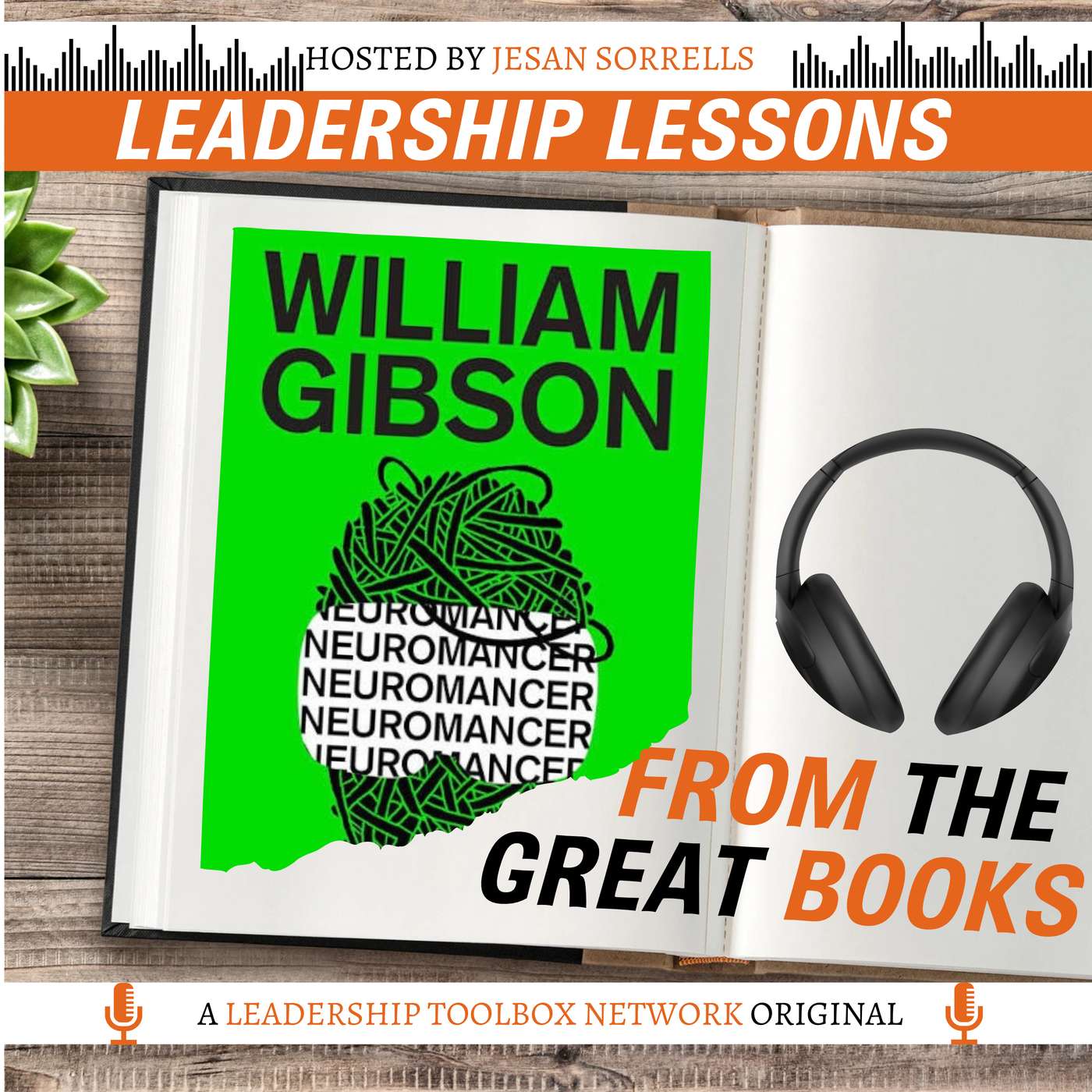
 Apple Podcasts
 Castbox
 Castro
 Goodpods
 Moon FM
 Overcast
 Pocket Casts
 Podbean
 Podcast Addict
 Podcast Republic
 Spotify